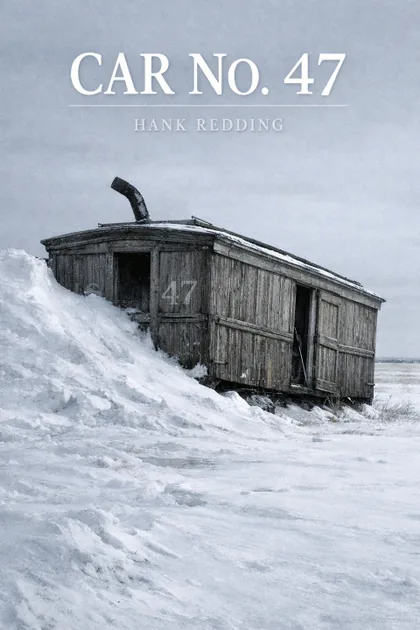
Car No. 47

Car No. 47 — visual frontispiece

A free literary Western survival story about an immigrant railcar detached during a winter storm on a northern branch line.

I

The train had been slowing for some time before anyone remarked upon it.

In Car No. 47 the change felt gradual, like breath easing from a chest. The iron wheels no longer struck the rails with their former insistence, and the stove pipe gave a thinner rattle against the roof. Most believed it was a siding — another pause in a journey measured now in days.

They had stopped often enough for the habit of stopping to become part of the journey. First came the loss of speed. Then the hard shudder as slack ran through the couplings. Then the silence after, deeper than sleep, while men somewhere ahead cleared drift or took water or argued with switches frozen in place. After a time the cars would lurch, breath would return to iron, and everyone would settle back into the forward pull.

So at first, no one was afraid.

The immigrant car smelled of coal smoke, damp wool, and boiled cabbage. The stove sat bolted near the center, its iron sides chalked white from heat and touched by gloved hands more often than necessary. Benches lined the walls, thick oak planks worn smooth by years before this journey ever began.

The car had not been built for comfort. It had been made useful and then made useful again. Old freight boards showed beneath newer braces. Iron brackets had been added where earlier repairs had failed. At the roofline, frost gathered around nail heads and darkened whenever the stove burned hot enough to make them weep.

Trunks were lashed against the rear boards with coarse rope to prevent shifting. Seed sacks rested beneath them. A crate of hand tools knocked softly against the floor each time the rails changed pitch. There were bundles wrapped in oilcloth, a churn with its handle tied down, two chairs with the legs lashed together, and a painted cradle no one had yet assembled.

The passengers had learned the rhythm of rail travel.

Slowings meant sidings.

Sidings meant waiting.

Waiting meant patience.

Patience was a virtue men like Thomas Whitcomb could praise because they had not yet spent the last of it.

Whitcomb stood near the lantern bracket, pamphlet folded in his coat pocket. Earlier that evening he had read aloud again from the land circular — acreage available along the branch, soil dark and generous, wheat tall enough to shade a man’s boot. He had pronounced each word carefully, as though speaking it made it nearer.

He had shown them the printed map too. A neat black line running west. Stations marked with names that sounded sturdy because print made everything sound sturdy. He tapped the paper with one finger and told them how towns began: siding, depot, grain office, church, school.

Whitcomb had sold printed lines before. Timber lots in Wisconsin. Town shares near a creek that went dry by August. Acreage whose survey stakes had not yet met the soil. He had not written those circulars, and he would have said so under oath if anyone asked. But he had held them up in rooms and watched men believe him.

Some had listened.

Some had slept through it.

Jakob Sørensen sat with his back to the wall, eyes closed not in sleep but in conservation. He had traveled before. He knew that warmth spent in worry could not be recovered. His coat was buttoned to the throat, and one mitten lay tucked beneath his elbow where no one could step on it in the dark.

He had wintered once in a logging camp where two men froze within sight of the cookhouse because pride had carried them farther than sense. He did not tell the story. Men who survived such things often saved the telling for no one.

Clara Meier kept her small trunk near her knee. Her fingers rested against the lid as if testing its temperature. The trunk was hardly large enough for a life, but she had arranged her feet around it with the care of someone guarding more than clothing. When the car jolted, she steadied it before steadying herself.

Inside were a Bible, three folded certificates, and a deed copy with her brother's name crossed once in pencil. Whether the crossing meant correction, dispute, or forgiveness, no one in the car knew.

Otto Krieger had untied and retied the strap on his own twice that evening, not because it needed securing but because his hands required occupation. He had large hands, rough across the knuckles, and the habit of looking at his palms afterward as if surprised by what they had done.

Those hands had once broken a shop window in St. Paul after a foreman held back wages for work already done. Otto had paid for the glass and paid again in days lost to a cell that smelled of limewash and old straw. His wife had brought him bread through the bars.

Marta Vollen shifted often, one hand resting beneath her coat against the small firmness of her belly. She breathed through her mouth to ease the smoke from her lungs. Each time the stove draft reversed, she lowered her head until the air cleared. Her husband had wrapped a scarf along the bench behind her to soften the boards, though the scarf was too thin to do much good.

She had buried two children before this one quickened. That was why she spoke of birth as if it were an appointment she intended to keep. Hope, in Marta, had become a form of stubbornness.

Greta Nyland sat opposite with two children asleep against her skirts. The boy’s mouth had fallen open from exhaustion. The girl held a crust of bread in one fist long after sleep had taken her. Greta did not remove it. Food kept in the hand was food not yet lost.

She wore no wedding ring though a pale mark remained where one had been. The children had their father's eyes, or so a woman at Fargo had said before Greta turned away and lifted both bundles herself.

Henrik Dahl had said very little after Fargo. He kept counting the seed sacks beneath the trunks, as though numbers might protect them from damp. Beside him, Nils and Peter Voss played at guessing distances by sound until the storm took that game away from them. They were old enough to be embarrassed by fear and young enough to look for their mother whenever the car lurched.

Henrik had borrowed for the seed at an interest he had not explained to his wife. The sacks were not only crop. They were time purchased from a man who wrote numbers in red pencil.

Ansel Bjornsen sat nearest the stove. He had not spoken since boarding at Fargo. Not once during loading. Not during Whitcomb’s reading. Not when Greta Nyland offered him bread. His silence had settled into the car as something ordinary.

No one knew whether he understood English. No one knew whether he chose not to answer. His coat had been issued by some county or workhouse once; the stamp inside the collar had been cut out with a dull blade. After the first day, people stopped asking.

Ingrid Halvorsen watched them all.

She kept her notebook beneath her seat, wrapped in cloth to keep the pages dry. She wrote most evenings, recording departure times, weather, names. It was not sentiment that drove her to it. It was habit. She had kept accounts before. If flour came in, she wrote flour. If money went out, she wrote money. If a child was born, a man died, a debt changed hands, a field yielded poorly, or a roof leaked in October, she believed it belonged somewhere more durable than memory.

She had written the names as they boarded because Whitcomb had read them too quickly.

Names could vanish under his voice. She did not like that.

Outside, wind pressed snow against the boards hard enough to muffle what little sound remained.

Inside, boots stayed on. Blankets remained wrapped. Breath gathered under the roof in a pale layer before disappearing into smoke. The lantern flame pulled once toward the rear door, then steadied, then pulled again.

No one rose to look.

Thomas Whitcomb checked his watch by lantern light and cleared his throat.

“We’ll be moving again shortly.”

Repetition steadied him. A few nodded.

The girl against Greta Nyland’s skirt opened her eyes and asked whether shortly meant morning. Her mother hushed her before anyone had to answer.

Ingrid did not look at Whitcomb.

She listened instead — not for wheels, but for the weight of them.

There was something different in the quiet.

The stove pipe rattled once. Not the usual rattle of motion. A thin strike, metal against wind.

Ingrid waited for the answer that should have come through the floor: the faint pull ahead, the couplings taking strain, the small forward argument of iron.

Nothing came.

She could not have said what had changed.

Only that the car no longer felt part of a train.

II

Elias Kade shifted his stance.

He had been bracing against motion for so long that stillness felt like imbalance. When the train ran, even slowly, there was a constant strain through the frame — iron pulling iron, slack tightening and easing, boards speaking to one another in low complaint. He had learned to lean with it without knowing he had learned it.

Now there was nothing.

He placed one palm against the wall beside the stove and waited.

Nothing answered.

No faint tremor traveled through wood. No distant pull moved through iron. No subtle tightening of structure came before forward motion resumed.

Only wind.

Kade had worked around horses long enough to distrust silence. A horse that stamped and blew was only frightened. A horse that went still had decided something. Iron was not flesh, but motion had habits, and the absence of a habit could be as plain as speech.

He had worked rail one winter too, though he had not offered that to Whitcomb or anyone else. Track gangs took men without asking much if the season was hard enough. Kade had learned coupling strain, brake smoke, and the sound a man made when iron took fingers before the mind believed it.

He moved his hand lower, to where the wall met the floor, and pressed his fingertips into the narrow seam. Cold lived there. Not ordinary winter cold, not the clean kind that made breath smoke and cheeks sting, but a deeper cold carried up through iron and timber from the buried rail beneath.

Time passed without being marked.

Whitcomb spoke once about drift ahead and clearing crews. No one replied. His words hung lower than the smoke before settling into the wool of coats and disappearing.

The stove pipe rattled again — not from movement, but from wind striking it at an angle. The sound was different. Hollow.

Sørensen opened one eye.

“Engine would strain against this,” he said quietly. “You would hear it.”

Whitcomb nodded as though that supported him. “Which is precisely why they’ve stopped us.”

Stopped us.

The phrase settled and did not move.

Ingrid adjusted the stove damper and watched the flame shift in response. The fire burned but did not draw cleanly. Without forward motion, the air seemed to hang inside the car rather than move through it.

She listened.

There is a difference between waiting and being left.

She did not yet name it.

The First Opening

Kade moved toward the door.

Whitcomb stepped forward.

“There is no need.”

Kade did not answer. He touched the latch with his gloved fingers and felt for vibration through the iron before lifting it. There was none.

“In this storm you will see nothing,” Whitcomb added.

“Then there is no harm in looking,” Kade said.

His voice surprised some of them. He had spoken during the journey, but mostly to ask for room near the tools or to answer when directly addressed. He did not carry authority the way Whitcomb carried it, with words arranged in front of him. Kade carried it in his hands. Men noticed hands when hands became necessary.

Dorn stood from the rear bench.

He did not come forward. He only watched the latch.

No one knew his first name. If Dorn had one, he had not spent it in the car. There was a pale rubbed place around one wrist where shackle iron or hard rope had once worried skin, and when Whitcomb spoke of procedure, Dorn's eyes went flat.

Ingrid said, “Let him see.”

Not forceful.

Just clear.

The latch lifted.

Wind forced the door wider than intended.

Snow drove inward in a flat sheet and struck the boards with the sound of sand against tin. The air outside was not empty — it was crowded. Snow crossing itself in conflicting directions, wind folding over wind.

The lantern nearest the door bent nearly horizontal, guttered, then found itself again.

Greta Nyland pulled both children into her coat. Marta Vollen lowered her head and turned away from the knife of air. Loose coal dust lifted from the floor and scattered against boots.

Kade stepped down carefully.

The drift reached mid-calf. The rail lay somewhere beneath it, invisible but present. He kept one hand against the side of the car as he moved.

From outside, the car looked larger and less real. In the whiteout its boards appeared and disappeared by inches. The number on the side was already crusted along the edges. 47. A mark made for clerks, not for the lost.

The rear coupler was crusted in ice. He brushed at it. Cold iron met his glove.

He looked down. The link still hung there, stiff in its throat of frost. He could not see the pin clearly. Snow had packed itself into every hollow and made all iron innocent.

He turned forward.

Where the next car should have been, there was only white.

No lantern glow. No dark interruption in the storm.

He walked further than was sensible.

Ten paces.

Fifteen.

Behind him, Car No. 47 dissolved into motion. The storm erased distance and scale.

He could not tell whether the train was gone or merely swallowed by drift. He crouched once and swept at the snow with both hands until his gloves struck rail. The iron ran forward under the drift, cold and certain, but the space above it had not been opened by a passing engine. No fresh wall of thrown snow. No low trench. No disturbance except his own knees and hands.

He listened, though wind made listening foolish.

No whistle. No bell. No answering groan of coupled cars.

He stood long enough for cold to begin entering through seams in his coat.

He returned.

Inside, snow followed him in.

They watched his face more than they listened to his words.

“I cannot see the engine.”

Whitcomb answered immediately.

“That proves nothing.”

Perhaps it did not.

But it proved something to Kade.

The Waiting

Morning thinned slowly through the upper boards.

The car felt heavier in daylight.

No whistle came.

The stove burned unevenly. Ash accumulated in one corner of the grate where draft reversed.

Whitcomb checked his watch again though it had already stopped.

“They will know by now,” he said once. “They will count the cars at the next station.”

No one asked how far the next station lay.

No one asked because each had already begun making a private measure of distance. The number of hours since the slowing. The number of times Whitcomb had said shortly. The number of times the stove pipe had rattled without the floor answering. The number of breaths a person could draw before admitting the air had changed.

Kade placed his palm against the wall again.

He closed his eyes this time.

He waited for the faintest tremor of iron traveling through wood.

Nothing came.

Ingrid wrote:

No whistle.

She did not add anything else.

The Decision

The rope lay coiled beside the tools near the rear wall.

It had been used to secure trunks during loading. It was coarse hemp, stiff from damp. When Dorn lifted it, the coil held its shape a moment before reluctantly loosening.

It was Dorn who suggested tying off.

“We follow the rail,” he said. “If they are there, we find them. If not, we return.”

Whitcomb hesitated longer this time.

Wind struck the boards in hard intervals.

“In this?” he asked.

“In this,” Dorn answered.

Kade did not argue. He tied the knot at the rear drawhead with hands that moved more confidently than a farmer’s should.

Ingrid noticed.

She said nothing.

The rope was looped around Dorn’s waist and knotted twice.

“How far?” Clara Meier asked.

Dorn looked toward the white beyond the door as though distance might show itself if addressed plainly.

“Far enough to know,” he said.

“Far enough is not a measure,” Whitcomb said.

Dorn tested the knot once by leaning his full weight against it.

“It is today.”

The door opened again.

Wind swallowed him almost immediately.

They held the rope between them.

At first, it tightened.

Then slackened.

Then drew forward in steady strain as Dorn walked.

They felt his weight shifting through it — cautious steps over buried rail, boot against drift. The rope became the only sentence passing between inside and outside. Every twitch carried more meaning than Whitcomb's assurances.

Ingrid stood beside Kade and watched the fibers move across his gloves.

“Too much slack and he is down,” Kade said.

“Too little and we pull him off his feet,” Dorn had said before stepping out.

So they held between those errors.

The rope reached its length.

It held.

They waited.

Snow struck the boards.

No whistle.

No strain in iron.

After several long minutes, the rope jerked twice.

They pulled him back.

His face was raw and pale where wind had found skin. Ice had formed along his beard and at the edge of his scarf. He stood with one hand against the door frame until his balance returned.

“There are no tracks ahead of us,” he said.

Not anger. Not fear.

Only report.

Snow had filled the track beyond their wheels completely. If the engine had passed only yards before, the cut of its going would have shown — a corridor carved through drift.

There was none.

For a moment even Whitcomb had no words ready.

The rope lay between them on the floor, wet with melt where the stove light touched it.

Car No. 47 stood alone.

III

The Journal

Ingrid Halvorsen removed the small leather notebook from beneath her seat.

She had wrapped it in cloth against damp. The edges had softened from handling, and a faint crease ran along the spine where it had once been bent too sharply and pressed flat again. It was not new. It had traveled before.

The notebook had crossed water in a trunk and prairie in a wagon before it ever entered Car No. 47. It had kept flour, lamp oil, paid debts, unpaid debts, weather, births, and the slow inventory of things a family believed it owned until distance proved otherwise.

She did not open it immediately.

Around her, the others shifted in the narrow space between benches and stove. The rope lay coiled near the rear. Coal sacks leaned half-emptied beside the tool crate. Snow pressed against the boards in steady rhythm.

Whitcomb stood near the lantern as though a man standing straight could keep a room from bending. Dorn sat with his hands open on his knees. Kade had not removed his gloves since coming back inside.

No one asked Ingrid what she intended to write.

That was one mercy of the car. So much had become public already that a private act was still permitted, if it was small enough.

She opened the book.

The first pages bore earlier entries from before this journey — dates and small accounts from a life now folded behind her. She turned past those without pause.

Coal oil, 2 tins.

Needle packet.

Roof leak above west wall.

Paid Larsen boy for stacking cordwood.

Those lines belonged to a house she no longer had. She did not linger over them. There were ways of being sentimental that stole heat.

The newer entries began at Fargo.

Three Days Out

Departed Fargo at dusk. Car loaded full. Stove lit before departure. Smoke heavy until draft settled.

Twenty-three persons aboard by manifest. Mr. Whitcomb read names too fast. I have written those I heard:

Thomas Whitcomb.

Land agent. Carries circulars. Says company office in Fargo will answer any claim made against acreage.

Jakob Sørensen.

Has seen winter camps. Warns against walking blind.

Clara Meier.

Keeps certificates in trunk. Says Bible belonged to mother's mother. Brother's name on one paper.

Otto Krieger.

Hands marked by shop work. Wife deceased or absent. Keeps letters wrapped.

Marta Vollen.

With child. Says child moves strong.

Greta Nyland with two children.

No husband aboard. Children feverish but quiet.

Elias Kade.

Knows latch, rope, iron. Says little of work before.

Ansel Bjornsen.

County stamp cut from coat. No speech.

Dorn.

No first name given. Watches officials more than weather.

Henrik Dahl.

Seed sacks. Counts often.

Nils and Peter Voss.

Others to confirm.

Mr. Whitcomb read aloud from land circular. Wheat soil described as "dark and generous." Says branch line newly graded beyond Jamestown. Freight runs twice weekly.

Ansel Bjornsen has not spoken since boarding. Eats when handed food. Watches fire.

Marta Vollen unwell but says child moves strong. Says she will not have it born on the train.

Wind rising west of the line. Snow began after midnight.

She paused there.

She remembered the sound of loading — crates striking plank, boots against ladder rung, Whitcomb calling names from the manifest as though calling them into future acreage.

Names had gone into the car as if into a ledger. One after another. Counted, checked, permitted west.

The train had taken them all.

She turned the page.

Second Day Out

Stopped twice for drift clearing. Delay of three hours near Valley City.

Otto Krieger concerned about seed sacks getting damp. Re-tied rope at rear.

Clara Meier keeps trunk near her knee. Says Bible belonged to her mother's mother.

Jakob Sørensen says branch lines never cleared fully until spring.

Marta slept poorly. Greta's youngest feverish but took water.

Kade repaired latch pin on tool crate with nail from floorboard.

Mr. Whitcomb says delays are ordinary.

Dorn refused to sign receipt for stores at loading. Said mark enough.

Ansel still no speech.

She remembered writing that last line with less patience than the others. Silence troubled people because it gave them nothing to arrange. A talkative fool could be placed. A complaining man could be answered. A silent one sat outside the ledger.

Ansel looked at her now from beside the stove.

If he knew she had written of him, his face did not show it.

She turned again.

The handwriting had grown smaller as space narrowed.

Night of the Storm

Train slowed near midnight. Mr. Whitcomb says siding while drift ahead cleared.

Wind strong against boards. Stove holding but draft uneven.

No whistle since stopping.

Children cold but sleeping.

Watch stopped on Mr. Whitcomb. Mine still runs but losing minutes.

She hesitated.

She added the line from the present.

Mr. Dorn walked the rail.

No sign of engine.

Snow filled the track ahead.

She waited, pen raised.

She could write that they were detached. She could write that they were abandoned. She could write that the engine had gone and left them, or that the storm had swallowed evidence, or that men somewhere ahead already knew and were turning back with shovels, lamps, and curses.

Each version asked more of the page than the page could honestly hold.

She wrote instead:

Car remains.

Then she crossed out remains because it sounded too calm.

She left space beneath the last line.

The page looked unfinished.

Across the car, Whitcomb began explaining how stations counted cars. He named manifests, conductors, sidings, clerks. His voice had a careful patience to it, as if he were instructing children in a system that would reward belief.

Dorn listened without looking at him.

Kade flexed his fingers once inside his gloves.

Clara Meier held her trunk with both hands.

Ingrid did not close the book immediately.

Instead, she ran her thumb once along the edge of the paper as if testing its dryness.

Writing was not comfort.

She wrote one more line.

If found, names must be copied.

She closed the notebook and placed it beside her knee.

IV

Coal

They brought the sacks forward into lantern light.

The canvas was stiff from damp where snow had crept beneath the door seam. Coal dust blackened the boards around the base of each bag. When Whitcomb first said three full sacks, Sørensen pressed his hand into the top layer and lifted it away coated.

"Two and some," he said.

They measured by bucket.

The metal pail rang lightly each time it struck the sack rim. Ingrid counted under her breath without meaning to. Each scoop made the remaining coal less mysterious and therefore worse.

Two sacks and one third.

At their earlier rate of burn, perhaps four days.

Without motion — without clean draft — perhaps less.

No one said the number aloud twice.

They all held it once.

Whitcomb cleared his throat.

"Clearing crews run ahead of schedule in winter," he said. "The line will not be left unverified."

Dorn did not look at him.

"Snow does not keep schedule."

"Men do," Whitcomb answered.

Dorn lifted one of the sacks and let it fall back into place.

"Not when they cannot see the rail."

No one spoke after that.

But when the bucket was filled again, it was Dorn who measured it level with his hand, not Whitcomb.

Food was counted beside it.

Dry bread gone stiff at the edges.

Salt pork wrapped in cloth.

Two jars of preserved cabbage.

A small sack of dried peas.

Flour intended for planting, not eating.

The flour was not mentioned.

It stood in the corner beneath a tied cloth, pale and useless and almost holy. Seed and flour had begun as promises. In the car they became weight. No one wanted to be the first to say a future could be eaten.

Whitcomb suggested that if the storm cleared within two days, rations need not change.

Dorn said reduce them now.

Whitcomb called that premature.

Dorn called it arithmetic.

No one raised their voice.

The disagreement existed in breath alone.

"The children eat," Ingrid said.

There were no objections.

That rule entered the car quietly and stayed.

Greta Nyland looked down at the two bodies folded against her skirt. The boy had woken and was pretending not to listen. The girl still held the old crust in one fist, now hard as kindling.

Marta Vollen said nothing, but one hand went to her coat.

Ingrid saw it.

"And Marta," she said.

This time there was a pause. Not objection. Calculation.

Then Clara Meier nodded once, and the pause ended.

She cut the bread into smaller portions than the night before. No one commented on the size. They ate more slowly.

Greta Nyland chewed longer than necessary, as if length of chewing could create more.

Otto Krieger folded his portion in half and placed part of it back into his coat. No one remarked on it.

Ansel accepted what he was handed and did not ask for more.

Whitcomb kept his portion untouched on his knee while he spoke of rescue. When he finally ate, he did it quickly, almost angrily, as if hunger had contradicted him in public.

Coal burned faster without forward motion.

The draft reversed at intervals, pushing thin smoke back through the seams of the stove pipe and into the car. It stung eyes. Coats were lifted to cover mouths.

Sørensen adjusted the damper repeatedly.

"Air is wrong," he said.

Without movement, the air inside settled instead of passing through. Heat rose to the ceiling and clung there. Cold pooled along the floor.

Boots felt colder by morning than they had the night before.

Ingrid marked the coal by pail and the bread by portion.

She did not write hunger.

She wrote:

Coal reduced by half bucket.

Bread half share except children.

Smoke returning through pipe.

Whitcomb said smoke meant the fire was starving.

Before Dorn could stop him, he lifted the bucket and shook a full measure into the stove. Coal struck iron in a black rush. Flame answered at once, bright enough to draw faces toward it.

"There," Whitcomb said.

For several minutes the car warmed.

Then the pipe coughed smoke back through the seams, thicker than before. Sørensen cursed and dragged the damper half closed. Kade opened the door a hand's width for air, and wind spent the new heat almost as quickly as the stove had made it.

Ingrid looked at the coal sack.

She crossed out half bucket and wrote:

One bucket lost.

When Whitcomb checked his watch again, it had stopped.

He wound it once, shook it lightly, then returned it to his pocket.

"They know by now," he said. "They will count the cars at the station."

No one asked how far that station lay.

No one asked whether a car could be counted missing if the men counting believed it stood behind them in the storm. No one asked whether a manifest corrected a blizzard.

When the coal dropped below one full sack, they began feeding the stove smaller portions.

The fire burned less evenly. Ash built up along one side of the grate and forced flame toward the other. The iron sides of the stove glowed faintly at night, then cooled faster than expected.

Ingrid marked each reduction.

She did not write feelings.

She wrote numbers.

Whitcomb said they would be collected when the storm passed.

Sørensen said storms sometimes remained longer than men thought.

The final bucket from the first sack was emptied.

They heard it when the canvas fell flat.

The sound of emptiness is distinct.

Dorn looked toward the trunks.

Whitcomb followed his gaze.

Neither spoke.

Small Friction

That afternoon, Clara Meier reached for the jar of cabbage before Ingrid divided it. It was not greed. It was instinct.

Her hand stopped midway.

She looked at Ingrid.

For a moment the jar became larger than itself. It held cabbage, salt, vinegar, an old garden, a kitchen, a woman deciding how much winter to store.

Ingrid nodded once and opened the jar.

The contents were divided by spoon.

Clara accepted her portion last.

No one commented.

The tension dissolved without a word.

As the stove burned lower, cold began to alter small things.

Greta Nyland's fingertips grew pale and then mottled.

Marta Vollen's breathing grew shallower at night.

Otto Krieger began waking before dawn and sitting upright long before light thinned the boards.

Henrik Dahl stopped counting the seed sacks.

The Voss boys stopped guessing distances.

Whitcomb spoke less frequently.

When he did, it was about procedures — how rail lines were inspected after storms, how manifests were verified.

Once, Dorn asked him whether he had ever wintered on open prairie.

Whitcomb said that was not the question.

Dorn said it had become the question.

The stove burned low.

Coal dust clung to every seam of clothing.

They began to look at wood differently.

V

The Trunk

Cold gathered in the corners where benches met wall.

No one suggested the benches yet.

Not aloud.

The benches were part of the car in a way luggage was not. Men could look at a trunk and imagine it separate from the thing that held them. A bench was structure. A bench was where a child slept, where an old man leaned, where a woman sat upright because lying down made the cold enter faster.

They were not there yet.

Dorn stood and walked toward the rear where the luggage was lashed. The trunks had been secured against shifting when the train ran. The rope that bound them was the same rope now lying near the door, thawing in a dark curve near the stove.

Snow had crept beneath the base of the stack and frozen in a thin crust along the boards.

"We begin with this," Dorn said.

He did not touch it yet.

Whitcomb rose at once.

"That belongs to someone."

"So does the coal," Dorn replied.

Whitcomb folded his hands behind his back.

"We wait one more day."

"For what?" Dorn asked.

"For instruction. For order."

Dorn rested his palm flat against the lid of the trunk.

"Order is wood," he said. "Wood is warmth."

Whitcomb's jaw tightened slightly.

"If we begin dismantling ourselves, what remains when they arrive?"

No one answered him.

The question lingered longer than the smoke.

What remained had begun changing before anyone touched the trunk. The car had already taken their schedules, their certainty, the privacy of hunger. It had made strangers listen to one another breathe and measure wooden lids by burn time.

The nearest trunk was iron-bound and scarred along its edges. The leather straps were cracked but oiled. A name had once been painted across the lid, but only the faint outline of letters remained.

Otto Krieger stepped forward.

"That is mine."

His voice held no challenge, only acknowledgment.

He crouched beside it without being asked.

For a moment he rested both hands flat on the lid as if measuring its weight. His thumbs moved once over the old painted place where the name had been. The paint had come off years before, perhaps in rain, perhaps in another wagon, perhaps under a hand that had cleaned too hard because arrival deserved clean things.

"What is inside?" Ingrid asked.

"Clothes. Papers. My wife's things."

There was no wife in the car.

No one asked where she was.

Silence held the question and let it pass.

Otto looked toward the stove, then toward the children, then down again at the trunk. When he spoke next, he did not speak to Dorn or Whitcomb.

"She packed it better than I would have."

Kade knelt opposite him and pressed his thumb against the seam where lid met base.

"Wood beneath the iron," he said. "Dry still."

Whitcomb shook his head. "If we dismantle luggage, what remains of order?"

Dorn answered him. "Warmth."

No one contradicted him.

Otto Krieger unbuckled the straps slowly.

The metal clasp scraped against itself in the quiet.

He lifted the lid.

The interior smelled faintly of cedar and wool.

Inside lay folded clothing, stacked with care. A bundle of letters wrapped in cloth. A small framed photograph, the glass cracked at one corner. A pair of women’s gloves laid neatly atop the stack. Beneath them were smaller things: a packet of needles, a comb with two teeth missing, a blue ribbon wound around a card, and a linen collar pressed flat between pages torn from a newspaper.

No one leaned close. That was another rule made without speaking.

Otto removed the photograph first.

He did not show it.

He slipped it into his coat.

The letters followed.

He held the ribbon between two fingers, then folded it into the same cloth as the letters. The comb he left where it was until Ingrid reached down and picked it up.

"Keep this," she said.

Otto looked at it as if he had forgotten a comb could belong to anyone.

He took it.

He hesitated over the gloves longer than the others.

They were gray wool, mended neatly at the thumb. Not fine. Not new. The sort of gloves a woman wore while working and then repaired because buying another pair would have been wasteful.

Then he placed them on the bench beside him.

"Take the rest," he said.

No one moved.

It was Ingrid who stood.

She lifted each garment and shook it once before passing it along.

A heavy wool shirt went to Henrik Dahl, whose own sleeves had thinned at the elbows.

A shawl to Greta Nyland, who wrapped it twice around her shoulders without meeting anyone’s eye.

An extra pair of socks to Ansel.

The linen collar went nowhere. No one needed a collar in Car No. 47.

The redistribution was quiet. Practical.

Nothing remained in the trunk but wood.

Ingrid opened the notebook.

She wrote:

Krieger trunk opened. Contents divided for warmth. Letters, photograph, gloves retained.

She stopped with the pen still touching paper, then added:

Owner consented.

It was a small mercy to write that. Perhaps a false one. Consent under cold was not the same as consent at home.

Dorn took the hatchet.

The first strike rang louder than it should have.

The iron bands resisted at first. Then the wood beneath split along grain lines that had waited decades for this.

Each blow echoed in the confined space.

Whitcomb turned his back.

Clara Meier looked down at her own trunk.

Her hand went to the latch and stayed there. The Bible was inside, yes, but so were the certificates and the crossed deed copy. If those papers burned, her brother's debt might burn with them, or her only proof might. She could not tell which future was protected by keeping them whole.

The first plank was pried loose.

It fed the stove reluctantly.

Flame caught slowly, licking at the edges before taking hold, then stronger.

Heat rose.

People edged closer by instinct, not decision.

The smell of cedar entered the car, faint beneath coal smoke and wool and hunger. For a moment the scent made the heat feel domestic, almost kind. A cupboard. A chest at the foot of a bed. A room where winter remained outside because walls did what walls were built to do.

Then the cedar blackened.

Otto Krieger did not weep.

He watched until the wood collapsed inward.

Once, in the St. Paul cell, he had thought a man could lose only liberty or money.

Ash settled into the grate.

No one thanked him. No one apologized.

The warmth was answer enough.

The trunk wood burned through the night. It bought them hours.

Nothing more.

By morning, the iron bands lay stacked beside the rear wall.

The stove ticked as it cooled.

They all looked differently at what remained in the car.

Clara Meier shifted her feet closer to her trunk.

Henrik Dahl looked away from the seed sacks.

Greta Nyland folded the shawl tighter around the children and did not look at Otto when she did it.

Otto remained seated longer than the others.

When the heat rose strongest, Greta Nyland slid her portion toward him without looking at him.

He did not acknowledge it.

He ate it slowly.

When the stove thinned toward morning, Dorn shifted closer without comment.

No one spoke.

They had burned one man's past.

VI

Sørensen

Jakob Sørensen did not wake.

There was no moment of realization. No sudden intake of breath from those nearby. It was Clara who noticed first — the way his shoulders remained fixed beneath the blanket, the way the rise and fall that had been shallow for days did not resume.

She reached toward him and stopped short.

"Ingrid," she said quietly.

Ingrid moved from the stove and knelt beside him.

His skin was cool where it had been warm the night before. Not frozen — not yet — but no longer holding heat of its own.

She pressed her fingers beneath his jaw, not to find a pulse but to confirm what the room already knew.

The stove ticked once.

No one spoke.

They did not ask whether he had struggled.

The cold had come by patience, not force.

There was no wound to dress, no hand to blame. Only a lowering over hours. Breath growing smaller. Sleep becoming less like rest and more like distance.

Sørensen had been right about the wind.

No one said that at first.

They moved him carefully toward the rear wall, near the door where frost had already gathered in thin white veins along the boards. His boots remained on. No one suggested removing them. There would be time for such considerations later, if later came.

Kade took his shoulders. Dorn took his feet. The body was lighter than either man expected and heavier because of that. Greta turned the children's faces into her coat. Whitcomb held the lantern high though daylight had already thinned through the roofline.

Ingrid closed Sørensen's eyes.

She returned to her seat, opened the notebook, and wrote his name plainly.

Jakob Sørensen.

She waited. The page wanted a date. It wanted an hour. It wanted cause.

She wrote:

Found cold before morning.

Then she stopped.

For a time, they left him untouched.

The blanket remained wrapped around his shoulders and torso, thick wool folded twice over itself. Frost gathered at its outer edge where breath no longer warmed it.

The stove burned low.

Cold reached deeper into the car now that one source of shared warmth had ceased.

Dorn saw the blanket first.

Or perhaps he had seen it earlier and refused to see it.

He stood. No one asked what he intended.

He knelt beside Sørensen and pressed his hand into the wool.

It was dry still.

"Blanket will burn longer than linen," he said.

The words were not loud.

They did not need to be.

Whitcomb stood.

"There must be respect."

"For the living," Dorn answered.

Clara Meier spoke without lifting her eyes.

"He should not be divided."

Dorn did not look at her.

"He already is."

The sentence entered the car and changed the air.

Whitcomb shifted where he stood.

"There must be record," he said quietly. "His name should remain whole."

Ingrid looked at the notebook by her seat.

"There will be record," she said.

Dorn's mouth moved once at that, almost a smile and not one.

For once, Whitcomb had not said something useless.

Ingrid watched the blanket.

She did not look at Dorn.

She did not look at Whitcomb.

She looked at Sørensen's boots, still dusted with coal and snow from days before.

"He warned us not to leave the car," she said. "He understood the wind."

No one contradicted that.

Ansel shifted near the stove.

It was the first sound he had made all morning.

Ingrid looked at him.

He touched the edge of his own blanket, then looked toward Sørensen. His mouth opened slightly. No words came.

Perhaps he did not have their language.

She stepped forward.

The wool resisted slightly when she lifted it from his shoulders — stiff where frost had begun forming along the outer fold.

She folded it once.

Then again.

The knife she used for bread cut through the center seam cleanly but not without effort. The sound of steel against woven fiber was sharper than anyone expected.

Greta Nyland closed her eyes.

Clara Meier made a small motion with one hand, not stopping her, not helping.

Ingrid handed half to Dorn.

The other half she replaced over Sørensen's chest.

"He keeps his share."

There was no ceremony in it.

Only measure.

Dorn fed the first half into the stove.

The wool smoldered before catching. The smell changed — thicker, heavier than trunk wood or linen. Smoke gathered low before draft found it.

Heat rose.

People leaned closer.

No one wanted to lean closer.

Everyone did.

Sørensen remained where he had been placed.

His share intact.

Ingrid returned to the notebook and added beneath his name:

Blanket divided. Half retained with body.

She considered writing that he had understood the wind. Instead she wrote:

Advised against leaving car.

Whitcomb did not speak again that night.

Near morning, the stove dimmed and the smell of wool faded into the older smells of the car.

Sørensen lay at the rear wall.

His name stayed open on the page.

VII

Benches

They did not touch the benches that first night after the trunk burned.

They sat upon them as if they were still seats and not fuel. The oak beneath them held both weight and memory — thick planks worn smooth from years before this journey. Bolted through the floor into the frame, they had been meant to endure.

Men had sat on them going west before Car No. 47. Women had slept against them. Children had kicked heels against the lower boards and been hushed. Freight had rubbed them. Boots had scarred them.

The stove burned low, and cold collected along the boards near the door.

By morning, frost traced thin lines along the windward wall.

Dorn stood without announcement and rested his hand against the bench nearest the stove.

It did not move.

Kade crouched and ran his fingers along the bolts fastening it to the floor. Rust clung to the iron heads. He tested one with the tip of the hatchet.

It did not yield easily.

Whitcomb watched.

"If we remove too many," Kade said quietly, "the wall will bow."

Whitcomb laughed once — not in humor, but in disbelief that such concerns still held weight.

"You assume it will matter."

No one answered him.

Kade set the hatchet against the first bolt and looked toward Ingrid.

She had the notebook open.

"One bench," he said.

She wrote it before the first blow fell.

They began with the bench nearest the stove.

Dorn struck the first bolt with the back of the hatchet to loosen rust before attempting to turn it. The metal shrieked against iron when it shifted even a fraction.

The sound filled the car, and Greta Nyland covered her ears.

The second bolt took longer.

Kade braced the plank while Dorn worked the head loose, the hatchet slipping once against the iron and biting into wood instead.

When the final bolt gave way, the bench shifted unevenly, tilting toward the stove as though already leaning toward its end.

They pried it free in sections.

The oak was dense. The grain tight. Each split required force that cost them breath. Dorn paused twice, not from reluctance but because labor used air the car did not readily give back.

Ansel gathered splinters as they fell and placed them in a neat row beside the stove.

No one had asked him.

When the first section was fed into the stove, flame caught slowly, then with sudden strength.

Heat surged outward.

Faces flushed. Breath eased. For a moment, the car felt almost restored.

Ingrid did not move closer.

She counted.

One bench.

She wrote it down later without commentary.

By evening, the warmth had thinned.

The floor beneath the removed bench now lay exposed — bolts protruding where wood had once anchored them. Cold crept upward through the gap, subtle but constant.

The car felt narrower.

They sat closer by necessity.

The windward seam widened slightly, just enough for snow to filter in fine powder along the floorboards.

No one brushed it away immediately.

It melted beneath boots and refroze at night.

They removed the second bench the following day.

This time the bolts resisted less.

The frame groaned audibly when the plank was pried loose.

Snow pressed harder against the windward wall as if testing it.

The seam widened the width of a finger.

Clara Meier pressed cloth into it. Henrik Dahl added one of his seed sacks, empty now, folding it twice before wedging it into the split with the hatchet handle.

For a little while the cloth held.

Then the wind found the edges.

When the second bench burned, the heat came quickly and left quickly.

Relief felt thinner.

Marta Vollen lay near the stove and did not wake the next morning.

There was less surprise this time. Her husband sat beside her until Dorn stood. He did not look at Dorn. He looked at Ingrid.

"Write her," he said.

Ingrid wrote:

Marta Vollen.

Then, after a space:

Child not born.

Marta's blanket was divided as Sørensen's had been.

The child was not written again.

The third bench required more effort. Hands were weaker. Dorn's grip slipped twice, and Kade steadied the hatchet.

Ansel collected splinters as they fell, arranging them beside the stove in careful order. One of the Voss boys reached for a piece and Ansel caught his wrist, not hard, only fast. He placed the splinter back in line and released him.

The boy did not reach again.

The car shifted visibly when the plank came free, a soft inward bend along the windward wall.

The structure no longer held evenly.

Cold entered without pause.

Whitcomb watched the wall bow and said nothing. His watch stayed in his pocket now. No one saw him check it. No one needed to.

The fourth bench stood alone.

No one argued for keeping it.

No one argued for removing it.

It simply remained between them and flame.

That night, they dismantled it. The bolts came free almost willingly.

The car gave a low, steady groan when the final plank was carried to the stove.

The floor beneath lay open to drift.

Cold entered immediately and did not wait for invitation.

They did not feed the whole plank at once. Dorn broke it smaller. Kade sorted lengths by thickness. Ansel placed the first piece on the coals.

The fire flared once more — bright, brief, hungry.

Ansel fed it carefully.

Ingrid wrote:

Fourth bench taken.

Then:

Wall leaning.

Then:

No seating remains.

She nearly crossed out seating because it sounded like a station agent's word.

She left it.

There was no wood left after that.

Only wall.

Only floor.

Only each other.

VIII

Final Entry

There was no more wood to consider.

The walls had been examined but not yet touched. Floorboards near the windward side had already loosened where bolts had been torn free. The car leaned perceptibly toward the drift — not enough to topple, but enough that balance required adjustment when standing.

No one said wall. No one said floor.

Food ended that morning. The final crumbs of bread were divided without comment.

The jar of cabbage had long been emptied.

Salt pork gone. Dried peas counted, then not counted again.

The flour intended for planting remained in its sack until someone untied it. There was not enough heat to make it food in any proper sense. Mixed with water, it became paste. Greta gave some to the children from the tip of her finger. Marta's husband took none. Otto Krieger swallowed his as if taking medicine.

Afterward the sack lay flat.

Whitcomb coughed through the afternoon — short, dry expulsions that produced nothing. He no longer spoke of timetables or branch lines. He sat with his back to the wall and watched the stove.

Once he reached for his watch and stopped before touching it.

Greta Nyland's hands had gone pale beyond their knuckles. She held them near the iron without reacting when heat brushed skin.

Otto Krieger lay down and did not rise again that day, though whether from sleep or surrender no one asked.

Breath hung low and did not lift.

When they cracked the door for breath, light struck the interior with a brightness that hurt the eyes. The snow outside rose nearly to the roofline. The opening could not widen beyond a hand's width without inviting collapse of drift.

Ansel tended the stove with pieces too small to matter.

He fed it by habit alone. Each splinter was placed, not thrown.

Ingrid watched him, then reached for the notebook.

Her fingers did not bend easily. The leather felt colder than it should have.

She opened to a fresh page.

The ink had grown lighter over the last two days. The nib dragged slightly against the paper where her grip weakened.

She began.

Eleventh Day

Fourth bench taken. No more wood but wall and floor. Greta fading. Mr. Whitcomb cough worse. Food ended this morning.

Flour wetted. Little swallowed.

Otto down near rear. Does not answer.

Ansel steady. Fire too large for what remains. Smoke wrong.

Wind quieter. Or we are.

Door will not open more than hand width. Snow higher than roof edge maybe. I think.

We waited proper. We did not leave. Jakob was correct. Mr. Dorn says line must clear. I think line is there but not ours.

Names remaining hard to know. Some sleeping. Some not. I wrote names as I could.

It is not the cold alone. Something presses. It feels like weight but there is no weight.

She stopped. Her hand cramped around the pen. She opened her fingers one by one and closed them again.

The car listened around her.

No one had spoken for some time. Even Whitcomb's coughing had quieted. The stove made its small iron sounds, cooling and flaring and cooling again.

Ingrid bent over the page.

I hear —

The train is —

The pen hesitated. A drop of ink pooled at the tip and spread into the grain of the paper.

There may have been sound beyond the car. There may have been memory.

Or only blood moving in the ear.

She could not tell. Her hand moved again, but the line it drew was no longer word.

The nib slipped downward. Ink thinned.

Then stopped.

She closed the book.

Or perhaps she did not.

The journal lay open beside her knee.

The stove burned through the last of the bench fragments Ansel had saved.

Oak collapsed inward. Iron ticked as heat left it.

Smoke gathered low before finding its way up through the bent pipe.

Snow pressed through the widened seam and spread in thin, steady lines across the boards.

No one rose to brush it away.

The rope by the door held its frozen curve.

The stove light dimmed.

No one spoke.

IX

Spring

The thaw came unevenly that year.

Snow did not vanish all at once. It settled inward, crust softening at the edges first, then collapsing under its own weight. Meltwater cut narrow channels through drift, exposing boards and rail in fragments before retreating again under night frost.

The country emerged by degrees.

Fence posts first.

Then telegraph poles leaning out of white.

Then black grasses flattened beneath snow.

Then the rail, bright in places where meltwater had washed it clean and dull where rust had waited under ice.

Sections of the northern branch line required inspection before regular traffic resumed west of the Dakota line. Frost heave had lifted rail in places. Couplings on idle cars needed clearing. Drift near shallow cuts had to be marked and removed before engines could pass safely.

Two men walked the line with iron bars over their shoulders and notebooks tucked inside their coats.

They moved without hurry.

Boots broke through crust where sun had thinned it. In shaded sections the snow held firm enough to support weight.

They spoke little. One had a scarf tied high over his mouth. The other stopped now and then to mark rail alignment, snow depth, washout, damaged ties.

They nearly passed the drift.

Only the bent stove pipe, angled wrong against the horizon, marked that something lay beneath.

They stepped off the packed rail bed.

The snow along the windward side had collapsed slightly from melt. Beneath it, dark wood showed through.

They began clearing with bars first, then with hands where snow had softened.

The roof emerged, then upper boards, then the number.

47.

The paint had faded but held.

One man said something under his breath.

The other did not ask him to repeat it.

They cleared along the door seam until the lower drift loosened and fell inward in heavy sections.

The door resisted at first.

When it opened, snow slid across the threshold and into the car in thick sheets.

Cold air moved outward — stale, layered with ash and wool.

They stepped inside carefully.

The interior remained.

Rear wall leaning. Floorboards pried free where benches had once been bolted.

The stove collapsed inward upon itself, iron warped and ash packed thick beneath the grate.

Blankets lay where they had been placed.

Boots remained near the rear wall, near the stove, along the boards removed for fuel.

The rope lay frozen in a curve beside the door.

They moved through the car methodically.

One pressed a hand against the windward seam and felt where boards had shifted under strain.

The other crouched near the rear coupling and brushed snow from iron.

The link remained.

The pin was missing.

He looked at the coupler a long moment.

Snow had filled the track forward completely. No corridor marked passage beyond.

At the front of the car, near where the final bench had stood, a small leather notebook lay half open against the floorboards.

Meltwater had fused several pages together.

One of the men lifted it.

He turned it once in his hands and opened it.

The pages separated in places and tore in others.

Ink had bled across the grain of the paper.

Names remained visible on the upper leaves.

Thomas Whitcomb.

Jakob Sørensen.

Clara Meier.

Otto Krieger.

Marta Vollen.

Greta Nyland.

Elias Kade.

Ansel Bjornsen.

Dorn.

Others blurred where water had entered before the thaw.

The final page held a slanted line trailing downward.

The man read what he could.

Fourth bench taken.

No more wood but wall and floor.

Wind quieter.

Or we are.

He closed it.

Placed it inside his coat.

In another office, later, someone would copy what survived and leave out what could not be made official. County stamp cut from coat. Brother's name crossed in pencil. Land agent with complaints unanswered. A man called only Dorn.

They stepped back outside.

One marked the location in his notebook.

He wrote:

Car 47 found in drift west of marker.

Coupler link present. Pin absent.

Interior damaged by exposure and removal of fittings.

Casualties aboard.

He paused after that line, the pencil held above paper.

Then he added:

Notebook recovered.

The other measured rail alignment ahead of the car and made note of frost lift along the line.

The obstruction would be cleared.

There would be forms after. There would be telegrams. There would be a report naming weather, equipment, delay, and failure in language that could be filed. Men would read it in rooms with stoves that drew properly. Someone would say unfortunate. Someone would say unavoidable. Someone would say the line had been newly graded and winter had been severe.

They stepped back onto the track. They did not look back.

Traffic would resume.

The line would hold.

Author's Note

In the late nineteenth century, railroads operated branch lines across the northern plains to move freight and settlers westward. Many immigrants traveled in what were commonly called “colony” or “immigrant” cars — older freight cars fitted with wooden benches and heated by coal stoves. Conditions were spare. Travel was long. Delays were common.

Before automatic couplers became fully standardized, link-and-pin systems were still in use on certain lines. These couplers were vulnerable to failure, particularly in severe winter conditions.

Blizzards across the Dakota and Montana plains in the 1880s and 1890s routinely halted rail traffic for days. Snow could drift higher than the cars themselves. Telegraph lines failed. Trains were delayed. Records were kept.

Car No. 47 is a work of fiction. The weather, however, is not.

More work lives elsewhere.