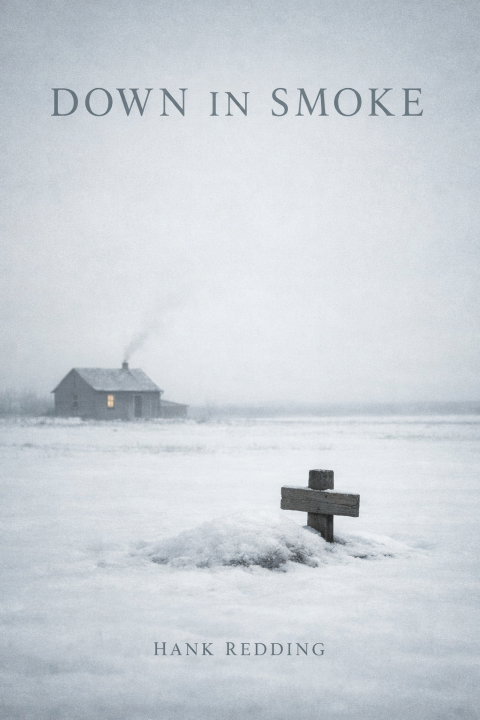
For the things we meant to return to.
Montana Territory, 1889
Part I
The camp sat where the grade stopped—where the survey stakes ended and the mountain began to argue back.
There were eight tents, a cook wagon, and a line of blackened stones that had been a fire every night for a month. The wind came down off the timber and worried the canvas until it sounded like a thing trying to get in. The men slept through it. They slept through anything if they’d swung a hammer long enough.
He woke before the others because he always did. Not from discipline—just from habit. In the dark you could still feel the day waiting on you, stacked and heavy.
Outside, the frost had taken the ground and turned the mud into a skin. It crunched under his boots as he walked to the edge of camp where the tool racks leaned against a cut stump. He ran his hand over the steel heads, checking for rust the way some men checked a child’s forehead for fever. He did it without thinking. He liked the certainty of it. Steel was honest. If it failed, it failed the same way every time.
Beyond the racks, the unfinished line ran out into the dimness like a sentence that had lost its end. Ties laid and spiked, then nothing. The mountain held the rest. It held it and kept its face blank.
He could hear the creek under the ice. It sounded like a low voice speaking from behind a door.
The cook wagon clattered. Someone was up. A lad—one of the younger hands—moving pots around like noise could warm them. The smell of coffee rose thinly, like it had to travel farther in cold air.
He walked back toward the tents and saw the foreman at the fire ring, bent over a small canvas sack.
The foreman looked up when he heard boots.
“Mail,” he said.
He didn’t say it kindly or unkindly. It was just a fact. A man got mail or he didn’t. Either way, the day went on.
The foreman dug in the sack and pulled out three envelopes, rubbed at the frost that had gathered on them during the ride up. He glanced at the names, then tossed them like playing cards.
One went to a man with a scar along his jaw. One went to a Swede whose hands were always cracked and bleeding, no matter what salve he used. The third came to him.
It was thin. Lighter than it should have been. He turned it over once before opening it, as if weight could tell him what it held.
The handwriting was hers. He knew that before he saw the slant. She wrote like she was making herself small—tight, careful, as if taking up too much space on the page might cost her.
He slid his thumb under the flap and opened it.
There was one sheet. Folded in thirds. No extra page, no pressed flower, no token. Just her words.
He read standing by the dead fire ring while the wind pulled at his coat and the morning tried to become daylight.
The first line was about the stove.
The draft has been poor again. I stuffed rags along the seam, but it still breathes wrong in the night.
He read more slowly after that.
She wrote about flour running low, about the store at the depot being closed three days a week now because the owner had taken sick. She wrote about the neighbor’s dog tearing into the chicken pen. Ordinary things. The kind of things you wrote when you didn’t want to write the other things.
Halfway down the page, the letter changed.
I have something to tell you that I did not know how to tell.
She did not draw it out. She did not soften it.
I am with child.
The words sat on the paper like nails. Small, square, driven flush.
He read that line twice. Not because he didn’t understand it. Because his mind refused to accept it as real until it had passed through him more than once.
He looked up without meaning to, as if the camp itself might have an answer. All he saw was canvas, dark timber, and the pale line of the grade disappearing into trees.
He read on.
I think it began when you came through in September. I have been counting. I have been certain for a week. I did not want to say it in my last letter because I did not want to steal your peace before winter.
He felt something then—something like heat, brief and inconvenient. Not joy exactly. Not fear. A tightening in his chest like the world had decided he was attached to it again.
He read the last third of the page.
I am well. I am still strong. I have not told anyone yet.
Then, lower:
I have been thinking of names. I will not trouble you with them in this letter.
Then the final lines:
I know you will do what you think is right. I have always known that.
Write when you can.
There was no come home. No demand. No accusation. The letter ended the same way her letters always ended: a quiet leaving of space for him to step into, if he chose.
He folded the paper and put it back in the envelope. He stood there longer than he meant to, holding it like it might change shape in his hand.
The cook wagon banged again. Someone laughed—short and sharp, the kind of laugh a man made when he didn’t want the cold to notice him.
The foreman said, “You get good news?”
He could have said yes.
He could have let it be that simple.
Instead, he nodded once and said, “From home.”
The foreman grunted. He dug his hands deeper into his coat pockets. “We’ll be on that cut all day. You’ll want your gloves.”
He started to turn away, then stopped, as if something had occurred to him.
“You’re lucky,” he said. “A man with something waiting on him don’t work as sloppy.”
He walked off before the words could land.
He stood alone with the envelope. He could feel the paper against his palm through the coat cloth. It was a strange thing—how a few ounces of ink could change the weight of the day.
He went to the tool racks again. He chose his hammer. He checked the handle for cracks. It was sound. The wood had been oiled and worn by his grip into something almost polished.
He thought of a small hand on wood. Not a baby’s hand—he didn’t think in those terms. He thought of a hand old enough to hold a tool. Old enough to be taught.
He imagined a boy standing beside him in spring mud, boots too large, face set with determination because he would have taught him not to complain.
He imagined showing him how to set a spike straight, how to listen to the ring of iron to know when it was seated right. He imagined correcting him when he swung wild, not angry, just firm—because the world did not reward wild.
He imagined the boy watching him, learning what was required. Learning that a man did not stop because he was tired. A man stopped when the work was finished.
He felt steadier as he imagined it. The future laid out clean, like track on straight ground.
He told himself what he always told himself: This is why I’m here. Not for the camp. Not for the men. Not for the foreman’s approval. For the mile pay. For the winter bonus. For the house in town that still needed fixing, the stove that breathed wrong, the roofline that sagged on the north corner.
For the child.
He tucked the envelope into the inner pocket of his coat as if putting it there made it safe.
He walked to the fire ring where the coffee had finally been poured and took a tin cup. The coffee was bitter, half grounds, half heat. He drank it anyway.
The men gathered with their cups and their silence. Faces roughened by wind and coal smoke. Eyes that had learned not to show too much. The younger ones spoke more, still believing speech could change the shape of a day.
Someone asked him where his woman was. He said, “Down by the depot,” and left it there.
The foreman called the line.
They moved out with their hammers and spikes and bars. The day opened in front of them like a mouth.
When he reached the cut, the rock face rose gray and blank, the blast marks still visible where powder had been set. The new ties lay in waiting. The rail lengths were stacked like dark ribs.
He knelt to set the first spike.
The hammer rose and fell.
Steel struck iron.
The sound rang out and returned from the trees as if the mountain were answering.
He worked harder than he needed to. He worked clean. He worked exact.
And all the while, in the pocket against his chest, her letter warmed slowly with his body heat—becoming, without either of them naming it, something like a promise.
The Clear Morning
The storm never arrived the way they said it would.
All evening the men had spoken of it as certainty—how the wind had shifted, how the air had gone metallic in the throat. The foreman had studied the clouds and said they’d be buried by dawn.
But when he stepped out of his tent the next morning, the sky was open and pale as hammered tin.
The frost was thick along the cut, but the wind had died. The mountain looked less like an enemy and more like something indifferent.
He stood still for a moment, listening.
No new snow sliding off timber.
No low thunder in the ridges.
Just the creek under its skin of ice.
It would have been possible to ride.
He knew the trail down-valley. He’d taken it in worse weather. If he left before the men lined up, he could be halfway to the settlement by dusk. If he pushed, he could reach town in three days.
He pictured the route without meaning to. The bend where the spruce leaned low. The narrow pass where the rock forced horse and rider single file. The stretch along the frozen river where you had to trust the ice.
He saw it all clearly.
Then he looked back at the stacked rails waiting to be set.
The foreman came out of his tent pulling on his gloves. He glanced at the sky and gave a short, humorless laugh.
“Storm went north,” he said. “Lucky for us.”
He nodded.
Lucky.
The word stayed in the air longer than it should have.
The men gathered with their tools. The younger ones spoke with relief, already grateful for a day without snow in their collars. Someone said they’d make good time now. Someone else said maybe they’d finish the cut before the week’s end.
The foreman was counting out spike kegs when he looked up at him.
“You said you had word from home.”
“Yes.”
“Everything steady?”
He considered the shape of the answer.
“She’s with child,” he said finally.
The foreman’s eyebrows lifted once, then settled.
“Well,” he said. “That’ll keep you honest.”
There was no malice in it. It was a common thought: a man with a family worked harder. Took fewer risks. Thought longer.
The foreman wiped his nose with the back of his glove.
“You thinking of heading down?”
The question was casual.
It was not an offer.
If he left mid-contract, there would be no winter bonus. No partial wage. The company didn’t pay men who walked away from mountain work in December. They paid men who finished.
He let the silence stretch just long enough to feel considered.
“Trail’s not right yet,” he said. “Ground’s still hard. Wouldn’t make good time.”
The foreman nodded once. That made sense. Hard ground meant brittle footing. A thrown shoe. A broken leg. Lost days.
“You finish this stretch,” the foreman said, “and you’ll have enough laid by to sit out spring if you want.”
He did not say: Or to bring them somewhere better.
He did not need to.
The men formed up. The first rail was levered into place. The day began.
He took his position along the ties and set his hammer to the spike head. The metal rang clean in the cold air. The sound carried.
With each strike, he imagined what the money would do.
He did not imagine holding an infant.
He imagined buying seasoned lumber for the sagging roofline.
He imagined replacing the stove with one that drafted correctly, so the house wouldn’t breathe wrong at night.
He imagined a cradle made from proper wood—not scrap.
He imagined a boy—always older in his mind—running alongside the line when he came home in spring, boots too large, asking questions about the work.
He imagined telling him:
A man finishes what he starts.
The spike seated with a final sharp note.
He moved to the next tie.
By midday, the sun had burned through the frost and the ground had softened slightly underfoot. It was not a bad day for riding.
He felt that fact settle somewhere behind his ribs.
He told himself it would be foolish to start down-valley now. He would lose two days just in travel. Better to finish this cut. Better to send wages ahead with the supply wagon next week. She would need them more than his shadow in the doorway.
He told himself the child was months from coming.
He told himself she was strong.
He told himself the letter would have said more if there were cause for worry.
At midday they broke for beans and hard bread. He sat on a length of rail and took the envelope from his pocket.
He did not unfold the letter this time. He just held it.
He traced the crease with his thumb and imagined her at the small table by the window, writing by lamplight. He imagined her pausing to press a hand to her stomach, testing the truth of it.
He imagined returning in spring with pockets full.
He imagined her face when he told her they could leave the depot town entirely—move west with the line if they wished, start fresh where the company would need steady families.
He imagined a future laid as straight as rail.
Across from him, one of the younger men—Thomas, barely beard-grown—watched him.
“You look like you’re counting something,” Thomas said.
“Always counting,” he replied.
Thomas grinned. “What’s it add up to?”
He looked at the stacked rails, at the cut through rock, at the line already set behind them.
“Something better than this,” he said.
Thomas nodded, satisfied with the answer, as if the word better explained everything.
After the break, the foreman called for volunteers to haul a fresh length of rail from the stack. It was heavy work, meant for four men.
He stepped forward before he’d thought it through.
“I’ll take front,” he said.
The foreman gave him a measuring look, then nodded.
They lifted together. The weight pressed down through his shoulders and into his spine. The cold iron burned even through gloves.
He did not need to take the front position. He could have worked the line and spared his back.
But standing at the front meant leading the carry. It meant being seen as steady. As reliable.
As the sort of man who did not abandon a contract when weather turned uncertain.
They set the rail in place.
He drove spike after spike until his palms numbed and the sound of iron striking iron blurred into a single long note.
By late afternoon, the cut had advanced farther than the foreman had predicted. The men were tired but pleased with the ground gained.
The foreman clapped him once on the shoulder.
“You keep at that pace,” he said, “and you’ll have something to show that boy of yours.”
He did not correct him.
He let the word settle—boy—as if it were already fact.
That night the campfire burned low and clean. The wind stayed quiet.
He lay in his tent and listened to the men breathing in the dark. He thought of her in the house near the depot, the stove breathing wrong, the floorboards ticking with cold.
He told himself she would be warmer with proper coal in spring. With a better stove. With repairs done right.
He closed his eyes and imagined the child standing, not swaddled.
Imagined a hand around his finger.
Imagined the boy’s weight solid and certain.
He did not imagine small lungs struggling for air.
He did not imagine fever.
Outside, the sky remained clear.
And in that clear air—without storm, without obstruction—he made his first mistake feel like discipline.
The Second Letter
The days settled into a pattern that felt almost earned.
They rose in the dark.
They worked until the light thinned.
They measured progress not by miles, but by the stack of rails that shrank behind them.
The cut deepened. The mountain yielded in inches.
He wrote to her on the third night after her letter.
He kept it brief.
He told her he was glad.
He told her he would see the contract through and return with enough to settle them proper.
He told her to keep warm and not trouble herself with lifting.
He did not mention the clear morning.
He did not mention how easy the trail had looked.
He sealed the letter and handed it to the supply rider when he came through with flour and lamp oil. He watched the rider strap the canvas sack behind his saddle and disappear down the line of trees.
After that, the waiting began.
He did not think of it as waiting. He thought of it as working.
The weather turned colder but did not close in. The sky held. Snow came light and powdery, the kind that brushed off coats instead of clinging.
They made better time than expected.
One afternoon, as they were setting ties along a bend where the grade narrowed against a drop, the foreman called a halt.
A rider was coming up the cut.
It was not supply day.
The horse was lathered dark along the neck.
The rider dismounted stiffly and pulled the mail sack from his saddle.
“Road’ll close soon,” he said. “Got one more run in before the drifts.”
The foreman took the sack and began sorting.
There were fewer envelopes this time. The pile thinned quickly.
When the foreman looked up, he was already watching.
“There’s one for you.”
The envelope was smudged. Damp along one corner. The handwriting was hers, but less steady.
He took it without speaking.
The men drifted back to their positions, giving him space in the way men do when something might be bad.
He stepped away from the cut and walked to where the rock face broke the wind.
He opened the letter carefully.
The paper inside was creased more than once, as if folded and unfolded before being sealed.
He began reading.
She did not write about the stove.
She did not write about flour or the depot store.
The first line was short.
He came early.
He felt the ground tilt slightly under his boots, though it did not move.
He read on.
He is small but alive. I did not send word sooner because I hoped I would not need to trouble you.
The next lines were thinner, as if the ink had been pressed harder.
He breathes shallow. Sometimes he seems to forget and I must wake him. I keep the stove full. I keep him wrapped. I sit with him at night so he does not grow cold.
He read that sentence twice.
He read it a third time.
There was more.
The neighbor woman comes when she can. She says some children begin this way and grow stronger.
Then:
If you can come, you should.
Not come home.
Not please.
Just:
If you can come, you should.
At the bottom of the page:
I have not named him yet. I thought we would do that together.
The letter ended there.
No closing line. No signature beyond her name.
He stood very still.
The air around him felt thinner than it had that morning.
Behind him, iron rang on iron. The work continued.
He looked at the date in the corner.
Five days past.
He counted without meaning to.
Five days to reach him.
Three days’ ride back if the trail held.
More if it didn’t.
He folded the letter once.
Then again.
He slipped it into his pocket beside the first.
He did not return to the line immediately.
Instead, he walked toward the foreman.
The foreman saw his face and stopped mid-sentence.
“Trouble?” he asked.
“The child’s come,” he said.
The foreman waited.
“He’s weak.”
The foreman removed his glove and wiped his nose with his sleeve.
“How long ago?”
He told him.
The foreman looked up at the ridge line. The sky had gone hard and bright again. No snow yet. Just cold.
“You ride now,” the foreman said slowly, “you might make it before the pass closes.”
Might.
He nodded.
“If I leave mid-contract?” he asked.
The foreman did not soften it.
“You forfeit winter wages.”
All of them.
He knew that already. He just needed to hear it outside his own head.
The foreman held his gaze.
“You could come back in spring,” he said. “If they’re steady.”
If.
He imagined arriving with empty pockets.
Imagined sitting in the house while she rationed flour.
Imagined a weak child and no coal.
Imagined neighbors saying he’d walked off mountain work.
He imagined the boy older—stronger—looking at him one day and learning that when things turned hard, his father stepped away from obligation.
He did not imagine a small body cooling under quilts.
He told himself the letter was five days old.
The child might already be better.
Or—
The child might already be beyond help.
If that were true, riding now would not change it.
He heard his own thoughts forming in clean lines.
“If I ride,” he said carefully, “and the pass closes behind me, I can’t get back up here.”
The foreman nodded once.
“That’s the risk.”
He looked back toward the men.
They were waiting without appearing to wait.
The line had to move.
He pictured the trail again.
He pictured the stove in the house.
He pictured her sitting upright through the night, keeping a hand on the child’s chest.
He told himself:
If he’s meant to live, he will.
He told himself:
Money will matter more next month than my shadow in the doorway today.
He told himself:
There’s still time.
He slid his gloves back on.
“I’ll finish the week,” he said.
The foreman did not argue.
He simply nodded, as if the decision had already been made the moment the letter was written.
He returned to the cut.
He lifted his hammer.
The first strike rang out sharper than usual.
The sound carried down the grade and back again, thin in the cold air.
He worked harder than he had the week before.
He volunteered for the heavy rails.
He corrected Thomas twice for sloppy alignment.
“A man has to think long-term,” he said when the boy bristled.
The words felt right in his mouth.
That night, the sky shifted.
Clouds gathered low along the ridge.
The wind came down hard and fast.
By midnight, snow struck the canvas in heavy bursts.
By morning, the pass was gone.
Part II — The Closed Pass
By morning the world had narrowed.
Snow lay up past the men’s boot tops, drifted in the lee of the rock face and packed hard against the tents. The trees along the ridge were bent, their branches carrying weight they would not shrug off until spring.
The pass was gone.
They knew it before the foreman said it. No one rode out after a fall like that. Not unless they meant not to return.
The men worked anyway.
They cleared what they could. They tamped snow from the ties. They set rail where the wind had scoured the grade clean. It was slower work. The sound of iron striking iron came duller now, swallowed by the air.
He did not speak of leaving again.
He told himself the decision had been taken from him. That mattered.
In the evenings, he unfolded the second letter and read it by lantern light. The canvas walls snapped in the wind, and the flame guttered when the cold pressed too hard.
He breathes shallow.
He tried to imagine what that meant.
He pictured the stove.
He pictured her adjusting the dampers, pressing cloth along the seams.
He imagined the child wrapped tight, face no bigger than a fist.
He did not know what shallow breathing looked like. He had never held anything that small long enough to learn its rhythms.
He told himself five days had already passed before the letter reached him.
He told himself children strengthened quickly.
He told himself if the worst had happened, another letter would be on its way.
He did not calculate how long that would take.
Three days passed.
Four.
On the fifth morning, the wind eased.
The sky broke open again.
The foreman stood at the edge of camp and studied the ridge through narrowed eyes.
“Give it a day,” he said. “Snow’ll settle.”
He could have saddled a horse then.
The thought arrived uninvited.
The trail would be rough. Slow. But not impossible.
He felt the weight of that knowledge settle against his spine.
Thomas came up beside him, stamping his boots against the cold.
“You got someone waiting down there,” the boy said.
“Yes.”
“You’ll go soon?”
“When it’s smart,” he replied.
Thomas nodded, satisfied. Youth believed in the word smart the way it believed in good weather.
That afternoon, as they were levering a rail into place, he misjudged the angle and the iron slipped. It crushed the edge of his glove and drove his knuckles into frozen ground.
He swore once, sharp and low.
Blood spread quickly through wool.
Thomas reached to steady the rail.
“You all right?”
“It’s nothing.”
He pulled the glove off and flexed his hand. The skin was split across two knuckles. Not deep. Just enough to sting.
He watched the blood bead and freeze along the crease.
For a moment—only a moment—he thought of her hands.
How she pressed dough flat against the board. How she held a pen too tight when she wrote in cold weather.
He pictured her fingers wrapped around something smaller than his wounded hand.
He put the glove back on.
“It’s nothing,” he said again.
That night the wind did not rise.
The sky held steady.
The pass would be rideable by morning.
He knew it.
He lay awake listening to the men breathe.
He thought of saddling before dawn. Riding hard. Not telling the foreman until he was already beyond the first bend.
He pictured arriving at the house before nightfall on the third day.
He pictured her surprise.
He pictured her relief.
He did not picture the possibility that she would not be surprised at all.
He did not picture the grave.
He turned on his side and pulled the blanket tighter.
He told himself:
If there were real danger, she would have written it plainly.
He told himself:
Five days. Then five more. If he were failing, word would have come.
He did not ask himself how quickly a small body could stop needing to breathe.
In the morning, the sky was clear.
The snow had crusted overnight.
It would bear weight.
The foreman was already at the fire when he stepped out of his tent.
“You could make it today,” the foreman said, not looking at him.
He did not pretend not to understand.
“If I ride,” he said slowly, “and the weather turns again—”
“It might,” the foreman said.
They stood there without speaking.
A man could ride.
A man could stay.
Both were defensible.
That was the comfort.
He imagined arriving to find the child stronger.
Imagined laughing at his own worry.
Imagined her saying he had worried for nothing.
He imagined arriving to find the worst had already passed.
In that case, riding hard now would only cost them wages.
He looked down at his hands.
The split skin had stiffened.
He flexed his fingers and felt the tug.
“A man has to finish what he starts,” he said quietly.
The foreman did not answer.
The men gathered.
They moved to the line.
He lifted his hammer.
The first strike rang out thin and bright in the clear air.
By midday, they had set more rail than the day before.
By afternoon, the sky shifted again.
Clouds gathered low and heavy along the ridge.
The wind returned.
It carried with it a sound he had begun to recognize—not quite a howl, not quite a warning. Just movement coming fast.
Snow began before dusk.
Not light.
Not drifting.
Hard.
By the time darkness fell, the pass was closing again.
He stood at the edge of camp and watched the white curtain draw across the trees.
For a moment, something inside him tightened.
He calculated backward.
Five days when the letter reached him.
Five more now.
Ten.
He tried to imagine what ten days meant in the body of a child born too early.
He did not have the knowledge to measure it.
He chose not to try.
He turned away from the ridge and went back to the fire.
Thomas was speaking about spring.
About how they would reach the valley by April.
He listened without hearing.
He told himself:
When the snow lifts for good, I’ll ride.
He told himself:
There is still time.
That night, as the wind pressed hard against the canvas and the lantern flame bent low, he unfolded the letter once more.
He read the line again:
If you can come, you should.
He traced the date.
He counted once more.
Then he folded the paper and slid it back into his coat.
He lay down.
He did not sleep easily.
But he slept.
And somewhere, on a different night, in a house near a depot that had never become what it promised—
The stove burned low.
And a small body grew quiet.
Part III — The Ride Down
The snow did not lift all at once.
It sagged.
It thinned along the edges first, revealing dark timber beneath like ribs through skin. The pass became something a careful horse could take if a careful man rode it.
He did not leave the first day it opened.
He told himself the trail would be better if he gave it another morning.
He told himself the men needed to set the last of the stacked rail before the next supply run.
He told himself ten days was already ten days.
What would one more change?
On the twelfth morning after the second letter, the sky cleared without argument.
The foreman stood with him at the edge of camp.
“You go now,” the foreman said.
It was not a question.
He nodded.
There was no ceremony to it.
He saddled one of the steadier horses, packed light, folded the two letters and slid them into his inner coat pocket.
Thomas shook his hand awkwardly, as if he were congratulating him on something.
“Bring back word,” the boy said.
“I will.”
He did not say what kind.
He started down-valley before the sun had cleared the ridge.
The trail was narrow where the snow still held. The horse picked careful footing along the frozen river stretch. The spruce bowed low and brushed his shoulders.
He rode steady, not reckless.
There was no reason to rush.
If the child were better, haste would look foolish.
If the child were gone—
He did not finish that thought.
The first night he made camp short of the settlement. The fire burned low and clean. He did not build it high.
He unfolded the second letter once more.
He read it without moving his lips.
He breathes shallow.
He tried, finally, to imagine it plainly.
A chest rising weakly.
A pause too long between breaths.
A hand pressing gently to wake him.
He felt something then—not panic, not grief. Something like irritation at his own imagination.
He folded the letter carefully and returned it to his pocket.
He slept.
On the second day, the trees thinned and the land opened.
He recognized the bend where the road dropped toward the depot. The fence posts leaned the same way they always had. The wind moved through the field in long, low strokes.
The house came into view without drama.
The roofline still sagged on the north corner.
The chimney stood straight.
Smoke rose from it.
A thin line.
Steady.
He felt his chest loosen.
Smoke meant fire.
Fire meant heat.
Heat meant breath.
He urged the horse forward.
The yard was quiet.
No wagon tracks fresh in the snow.
He dismounted and tied the reins to the fence post he had set himself two years earlier.
The boards of the porch creaked under his weight.
He did not knock.
He opened the door.
The air inside was warm, but not bright.
The stove burned low. The room held the smell of iron and wool and something else—something faintly sour beneath it.
She was at the table.
Not sitting.
Standing.
Her hands rested flat against the wood.
She looked up when the door opened.
She did not startle.
She did not cry out.
She looked at him the way she might look at a man returning from town with flour.
“You made it,” she said.
He stepped inside and closed the door behind him.
“Yes.”
He looked past her without meaning to.
There was a cradle by the stove.
It was small.
Handmade.
Not his work.
He felt the weight of that without understanding why.
He took off his gloves.
“How is he?” he asked.
The question sounded ordinary in the room.
She held his gaze for a long moment.
Then she said, “He was warm when he went.”
The words were simple.
He waited for more.
She did not give it.
He looked at the cradle again.
It was empty.
The quilts inside were folded flat.
“When?” he asked.
“Three nights after I wrote.”
He calculated.
Three nights after.
Five days for the letter to reach him.
Seven more before he rode.
Twelve.
He nodded once.
There was a roaring in his ears that did not belong to the stove.
“You should have sent word,” he said, before he could stop himself.
She did not flinch.
“I did.”
The words were not sharp.
They were not defensive.
Just stated.
He looked at her hands on the table.
They were thinner than he remembered.
“I would have come,” he said.
She studied him.
“I know,” she said.
It was not agreement.
It was not accusation.
It was simply the end of that line of conversation.
He stepped toward the cradle.
He did not touch it.
“What did you call him?” he asked.
She glanced toward the window.
“I didn’t.”
He looked at her.
“I thought we would,” she said.
The room held still.
He became aware of the house in ways he had not before.
There was no small blanket draped over the chair.
No basin by the stove.
The air felt larger.
He swallowed.
“Where?” he asked.
She turned and walked to the door.
He followed.
The yard was white and quiet.
Beyond the fence line, near the edge of the field where the snow had drifted deeper, there was a small mound.
A board stood at its head.
Rough-cut.
He walked to it alone.
The snow creaked under his boots.
He stopped at the edge of the mound.
The board bore a name.
Spelled as she had once suggested.
Not the stronger version he had argued for.
The softer one.
He stared at it.
The letters were carved shallow but steady.
He did not kneel.
He did not remove his hat.
He stood and read it twice.
He tried to imagine the moment of carving.
Her hands steady in cold air.
The neighbor woman watching.
The ground hard beneath a shovel.
He realized, distantly, that he did not know how long it had taken her to dig through frozen earth.
He looked back toward the house.
She stood on the porch.
Not watching him.
Just standing.
He turned back to the board.
The snow around the mound was packed flat.
No footprints left to read.
He calculated again.
Three nights after the letter.
He could have been on the trail the day it arrived.
He could have ridden the first clear morning.
He could have—
The wind moved across the field and cut the thought short.
He exhaled slowly.
“There was nothing to be done,” he said aloud.
The words hung in the air and dissolved.
Behind him, the chimney released another thin line of smoke.
Steady.
He turned back toward the house.
She had gone inside.
Part IV — The Night Inside
The house felt smaller after he came back from the field.
Not cramped.
Just rearranged by absence.
She had set a plate for him without asking if he would stay. Beans and a heel of bread. The stove ticked softly as the draft shifted. The chimney pulled clean. He noticed that. She had fixed it.
They ate at the table where she had written both letters.
He told her about the cut through rock. About how the men had made better time than expected. About Thomas misaligning a rail and having to reset it.
He spoke as if describing weather.
She listened.
She did not interrupt.
When he finished, she said, “The neighbor woman helped.”
He nodded.
He waited for her to say more.
She did not.
The room did not ask for comfort.
It did not ask for explanation.
After the dishes were cleared, he walked to the cradle again.
He touched the wood this time.
The edges were not smoothed properly. The nails sat slightly proud of the surface. Whoever had made it had done so quickly.
“You built this?” he asked.
“No,” she said.
He let his hand rest on the rail a moment longer.
He imagined the child lying there.
He imagined the shallow breath.
He imagined her waking him in the night to keep him from drifting.
He felt a tightening in his chest and mistook it for anger.
“You should have named him,” he said.
She looked up from the stove.
“I was waiting.”
There was no accusation in it.
That was worse.
Later, when they lay down, they did not touch at first.
The mattress sagged in the middle as it always had. The wind moved faintly through the eaves.
He stared at the ceiling.
“I would have come,” he said into the dark.
“I know,” she replied.
He turned his head toward her, though he could not see her face clearly.
“The pass closed,” he said. “It wasn’t safe.”
There was a long pause.
“When?” she asked.
The question was quiet.
He understood it immediately.
He pictured the clear morning. The frost. The sky like hammered tin.
“The weather shifted fast,” he said.
Another pause.
“I sent two letters,” she said.
The words did not land hard.
They settled.
He felt something move in his chest.
“I received one,” he said.
She did not respond.
He considered the possibility of a second envelope lost in snow. Dropped along the trail. Misplaced in the camp sack.
He did not consider that it might have arrived and been set aside.
He did not consider that he might not have wanted to open it.
“You did what you thought was right,” she said finally.
It was the same sentence she had written in the first letter.
He let it stand as absolution.
They lay in silence after that.
At some point, she shifted closer.
Not seeking.
Just settling.
He placed his hand lightly against her back.
Her body was thinner.
He realized then that he had imagined her waiting unchanged.
He had imagined the house paused until his return.
He had not imagined time moving through it without him.
In the dark, he tried to summon the image of the child’s face.
He could not.
He tried to remember if the first letter had mentioned the color of his hair.
It had not.
He felt a flicker of unease at the blankness where memory should have been.
He closed his eyes.
There was nothing to be done.
He repeated it until sleep took him.
Morning
She was already up when he woke.
The stove was lit.
Light came thinly through the window.
He sat up slowly.
For a moment, he did not remember.
Then he did.
She stood at the table, folding something into a small bundle.
A shawl.
The one she had worn through winter.
“You’ll go back?” she asked without turning.
“Yes.”
“When?”
“Today.”
She nodded once.
He waited for her to ask him to stay.
She did not.
He waited for her to tell him to leave.
She did not.
He dressed in silence.
He folded the two letters and placed them back in his coat.
At the door, he paused.
“I’ll send money,” he said.
“I know,” she replied.
He stepped out into the cold.
The grave lay quiet at the edge of the field.
He did not walk to it again.
He mounted the horse.
As he turned toward the road, he glanced once at the chimney.
Smoke rose in a thin, steady line.
The draft held clean.
She had fixed it.
He felt a strange sense of relief at that.
Relief that something in the house now worked the way it should.
He told himself:
She will be all right.
He told himself:
There was nothing I could have done.
He told himself:
The boy would have been weak anyway.
He told himself many things.
The road bent toward the trees.
The house slipped partially from view.
The smoke remained visible a moment longer.
Then the ridge took it.
He did not look back again.
By the time he reached the first narrow stretch along the frozen river, he had already begun arranging the story he would tell.
Hard winter.
Bad timing.
Pass closed too soon.
Nothing to be done.
The words fit together cleanly.
They did not snag.
By the time the rail camp came into view two days later, the version had settled.
Thomas ran to meet him.
“How is he?” the boy asked.
He removed his gloves slowly.
“Didn’t make it,” he said.
Thomas looked stricken.
“I’m sorry.”
He nodded once.
“Some aren’t meant for the long run,” he said.
The words came easily.
The foreman studied him longer than the others had.
“You staying?” the foreman asked.
He glanced up at the ridge where the line continued, unfinished.
“Yes,” he said.
The foreman nodded.
They walked back toward the cut together.
The rails waited.
The mountain waited.
He lifted his hammer.
The sound of iron on iron rang out again in the clear air.
Steady.
Unbroken.