Chapter One — The Slow Place
He had told himself he would drive past.
The turnout was where it had always been, a wide spot of gravel below the county bridge, and he was slowing before he had decided anything. He pulled in and shut off the engine. Dust came up around the truck and hung there, then settled on the hood without hurry. Under the hood the engine ticked as it cooled, a small dry sound, like something keeping count.
He sat with his hands on the wheel. Eleven months sober. He still counted. A man at the meetings in Rawlins had told him the counting stopped mattering after a while, and he had nodded, and he still counted. Three hundred and thirty-one days. He had worked it out at the last gas stop on the back of the receipt, then folded the receipt and put it in his shirt pocket as if it were worth something.
He rolled the window down. The air that came in was cold and smelled of the river: wet stone, and the sweet rot of leaves going soft in the shallows, and under that, on a little wind from up the draw, sage. It was the smell of every October he could remember from before he stopped noticing Octobers.
The river ran brown at the edges and clear in the middle. Below the bridge it spread out over a gravel bar and slowed almost to nothing before it gathered itself and went on around the bend. She had called that stretch the slow place. She had been four, maybe five. It was the only part of the river she was allowed in past her ankles.
He got out. His left knee locked the way it did now after any long drive, and he stood holding the door until it let go.
The cottonwoods were older and so was he. Their leaves had gone yellow and were coming down a few at a time, turning over in the air, landing flat on the water and riding off downstream as if they had somewhere to be. A flood had taken one of the trees since, and its trunk lay along the bank with the roots turned up like an open hand. Otherwise it was the same. A pickup crossed the bridge above him and the joints in the deck went ka-thunk, ka-thunk under its tires, and he had not thought of that sound in twenty-six years and knew it before it finished. He walked down to the water and stood where the gravel went dark with wet.
He had found out from a newspaper in a diner. Not the Rawlins paper. One from back here, left on the counter by someone passing through, folded open to the page nobody reads, with the brown ring of somebody’s coffee cup across the top. Four inches of type. Her first name, which he had chosen. A last name that was not his. Her age, thirty-two. Survived by her husband; a son, eight; her mother; a stepfather; two brothers. Services already held. In lieu of flowers, a fund at the high school he had never once seen her walk into.
It did not say how. He had not asked anyone. Her mother’s number was the same number; he knew because he had dialed all but the last digit of it twice in March, sitting in the truck outside that diner with the heater blowing, and both times he had set the phone face down on the seat.
It did not list him. He read it three times to be sure. That’s fair, he had thought. That’s about right.
He had been almost proud of that thought for about a mile. He had said it out loud in the cab, That’s fair, the way a man says it at a sale barn when the bidding goes against him and he wants the ring to see he can take it. There had been nobody in the cab to see. Then he had understood that it was a way of being gracious about something that had never been his to be gracious about, and he had not been able to stop understanding it since.
That was March. It was October now.
He crouched, and his knee told him about it, and he put his hand in the water. It was colder than he expected, cold enough that it went past cold into an ache in the bones of his wrist where the pins were. He kept it there until it hurt, and then he kept it there because it hurt, and then he took it out, because even that was a kind of asking.
“I didn’t know if I’d come,” he said.
He did not look up when he said it. He had never been easy talking upward. He spoke to the water instead, which had never once pretended to be listening.
Chapter Two — Eleven Months
He walked a little way downstream, where the bank dropped and the grass gave out, and the mud took his boot heels and let go of them with a sucking sound.
“I quit,” he said. “Last November.”
It came out smaller than he had practiced. He had practiced it in the truck for a hundred and forty miles, and somewhere in those miles it had lost whatever he thought it had.
“I’d like to tell you I quit for you,” he said. “I didn’t. A man pulled me out of my truck in a snowbank outside Laramie, and I let him. That’s all it was.”
He could still feel it if he let himself. The cab tipped at an angle, the heater roaring, the windshield packed white. A bottle rolling in the footwell with an inch left in it. A stranger’s face at the side window, a big man in a feed-store cap, knocking on the glass with a flashlight and saying, Hey. Hey, buddy. You with me? He had not been with anyone. He had not been with anyone for a long time.
Three days later the man had driven him to a church basement in Laramie, because he had said he would, and had sat beside him on a folding chair in a room that smelled of floor wax and burnt coffee, and had not said a word the whole hour. He had gone back the next week on his own. He did not know why. He still did not entirely know why, and he had stopped pretending at the meetings that he did.
In the third month a woman who kept the chips in a cigar box had asked him, after, by the coffee urn, whether he had anybody he meant to make it right with. He said he had a daughter. She asked what her name was, the way people do, just to have something to hold on to. He said, My daughter, again, as if that were the answer, and she looked at him a moment and let him have it. He had not said the name out loud since the April he left. He did not know anymore whether he could.
The river went around a half-sunk log and frothed white and smoothed out again.
“You’d have wanted it to be for you,” he said, and then stopped, because he did not know that. He did not know one thing she would have wanted after she was six years old. He had been about to tell her.
He looked at his hands. They were steady now. For years they had not been, and he had blamed the cold, and the wrist, even in August. He had learned to hold a coffee cup with both hands so nobody would notice. She had noticed. She was six and she had noticed, and she had started holding her own cup with both hands too, her milk, her cocoa, because that was how her father did it.
He had forgotten that until this moment. He had forgotten it on purpose, and for a long time.
“I don’t expect anything for it,” he said.
It sounded like a man waiting to be told he didn’t need to expect anything. He heard that. He let it stand there in the cold, because it was true, and because there was nobody to tell him otherwise, and that was how it should be.
Chapter Three — The Circuit
He sat down on the dead cottonwood. The bark had come off it in long strips, and the wood underneath was gray and smooth and cold through his jeans.
He had been a bronc rider once. That was how he would have put it at twenty-two, and it had been true for about four years, if you did not ask how good.
He grew up on a lease outside Meeteetse, the third of four boys, under a father who said almost nothing and meant all of it. At sixteen he got on a saddle bronc at a ranch rodeo on a dare, and stayed on for five seconds, and came off over the horse’s left shoulder, and lay in the dirt looking up at a white sky with his ears ringing. He remembered thinking that it was the first thing that had ever actually happened to him. He was hooked before he could stand up.
He rode amateur for two years, then bought his card. He won some, not much. He broke his collarbone in Ogden and his left wrist twice, and the second time a doctor in Rapid City put two pins in it and told him he was done. He rode three more weekends with the cast cut down and taped before he believed it. After that he worked as a pickup man for a stock contractor out of Thermopolis, and that was the one thing he was ever truly good at.
There was a night in Sheridan he could still see whole.
July, the last performance of the week. The arena lights had so many moths in them they looked like they were snowing. He sat the gray gelding along the far fence, outside the light, where the air smelled of churned dirt and manure and the fry grease from the concession stand, and he waited. The last bronc out was a sorrel mare called Short Notice, with a kid from Oklahoma on her who could not have been nineteen.
She came out of the chute high and twisting, and at six seconds the kid lost a stirrup and went off the side, and the other boot stayed hung. She dragged him. The crowd made the sound a crowd makes, all at once and then nothing. He was already moving. He came in on her left at a dead run, leaned out across the gap, got a hand on the flank strap and jerked it loose. When she broke stride he caught the bronc rein, took two wraps around his horn, and turned her head into the gelding’s shoulder until she had to stop or go down, and she stopped. Then he leaned out of the saddle with the mare blowing hot against his knee and worked the kid’s boot out of the stirrup, heel first, the way you would take a boot off a sleeping man. The kid rolled clear under the fence. He shook off the wraps and let her go, and Short Notice ran a wide circle with her stirrups flapping and went out the stripping gate as if nothing had happened, which for her was true.
The kid stood up and waved his hat, and the bleachers stood up for him. The announcer said the pickup man’s name over the loudspeaker, once, and spelled it wrong. He had not had a drink in nine hours. His hands were as steady as a carpenter’s.
By eleven the stock was loaded into the semi, and by midnight he had drunk most of a bottle in the cab with the contractor’s son, and at one he pulled the semi out alone for Cheyenne with three hundred miles of dark ahead of him and a can between his knees. Past Casper the road went into a long bend he did not see coming. He felt the rumble strip under the right tires and pulled the wheel too hard, and the whole load swung behind him like a door, and he heard, over the engine, a horse go down.
He stopped on the shoulder outside Glenrock with the flashers going. He climbed up on the trailer and put the flashlight through the slats. It was the sorrel mare. She was down on her side in the front compartment with her legs folded wrong under her, and the others were stepping on her and around her in the dark. He went in. He did not remember going in, only being in there, the heat of them, the steam off their backs, the smell of urine and fear, getting a hand on her halter and talking to her in a voice he had not known he had until she got her front legs under her and then her back and stood. She had a gash on her hind leg, above the hock, where the hide had opened on a bolt head. He doctored it with the purple spray from the truck box, by flashlight, on the shoulder of the interstate, and his hands shook so hard he got it on his own arm.
In Cheyenne the contractor looked at the leg and asked what happened. He said she had caught it on the gate loading out in Sheridan. The contractor nodded. That mare, he said, she had always been hard on herself. It did not occur to the man to doubt him. He was the sober one. Everybody had seen him that night.
For years he told the Sheridan story at every bar on the circuit, and it was always the story of the kid from Oklahoma. He thought about that now, how proud he had been of the sober part. How he had held it up for years as if it were the whole story, as if the hours after the lights went off belonged to somebody else. Every telling had been worth a drink to somebody, a man down the bar who had been in the stands that year or said he had. He had never once told the part past Casper, and over the years the not telling had come to feel to him like a kind of modesty. The purple stayed on his arm for most of a week. Nobody asked about that either.
Chapter Four — Darlene
He met her mother at the county fair in Riverton, the summer he was twenty-five.
She was working the rodeo secretary’s window, taking entry fees through a slot in the glass, a gray cash box at her elbow and a fan going behind her that did nothing but move the heat around. He came up to pay a friend’s fees with a wad of damp ones and fives out of his jeans. She counted it twice, slowly, in front of him, with a face that did not change, and then she slid three dollars back under the glass and told him he had overpaid. Nobody in his life had ever told him that.
Her name was Darlene. She was twenty-one. She had freckles across the bridge of her nose and wore her hair pulled back so tight it looked like it hurt, and she kept a pencil behind one ear that he never once saw her use. She smelled, when he finally got close enough to know it, of hand lotion and arena dust, which got on everybody.
He came back to the window four times that weekend with no reason. The fourth time she asked him if he could count, and he said not well, and she laughed, once, as if it had surprised her.
She was taking classes at the college two nights a week, toward a nursing license. She had a plan, written out in a spiral notebook with a green cover: the license, a job at the hospital in Lander, a house with a yard that was grass and not dirt. She showed it to him on their third night out, sitting in the cab of his truck in the lot at the A&W with the root beer going flat on the dash, and he thought it was the most hopeful thing anyone had ever shown him. He meant to be part of it. He had meant that.
Her father drank. He found that out later, and should have understood more from it than he did. Her father drank the way men in that country drank, steadily and from morning on, and never in a way anybody in the family named out loud. Darlene had grown up reading the sound of his boots on the porch steps. She knew which kind of quiet meant go to your room. She had learned all of it before she was ten, and she had learned the most important part, which was that you did not say it.
He thought sometimes that she had married him because he was familiar. He thought sometimes that this was only something he told himself, so that some of it would be her doing and not his. He did not know. He had never asked her that either.
They were married in October in her mother’s front room, by a justice of the peace, with a sheet cake on the dining table and folding chairs borrowed from the Lutheran church. He was hungover for it. She knew. In the hallway beforehand she straightened his collar and smoothed it flat with both hands and did not say anything, and he took that for kindness. It was kindness. It was also the first time.
Chapter Five — The Arrangement
When she was carrying the baby he came off the road. Darlene asked him to, and he did, and he was proud of that too. He sold the gray gelding and took a job with the county, running a grader on the gravel roads north of town, out at six and home by four with the dust of forty miles in the creases of his neck. They rented a house on the east edge of town with a carport and a chain-link fence and a cottonwood out back that let go of its cotton every June until it lay in the corners of the yard like snow that would not melt. Darlene put the green notebook in a kitchen drawer. There would be time for the license later, when the baby was in school.
He did not quit drinking. Nobody asked him to. What happened instead was quieter than quitting, and for years afterward he believed it had been nearly as good.
It went underground, the way water does in that country, running along beneath a dry wash where you cannot see it, though everything that grows there knows it is there. They made rules for it. They never once said the rules out loud, which was how they knew they were rules.
Nothing in the house before supper. Beer was not drinking. Whiskey was for his back, which was bad, everybody knew it, from the broncs; that part was even partly true. The cooler stayed in the truck, and the truck stayed under the carport, and the carport was outside, and outside did not count.
Darlene bought the beer herself, a case at a time, with the groceries, so that he would not have to stop at the Stockman’s on the way home. A man who came straight home from work was not a drinking man. They both understood that. She wrote it on the list between the bread and the milk, in the same handwriting.
Thursday nights he bagged the empties in a feed sack and drove them out to the dump himself, so they would not rattle in the can at the curb where the neighbors could hear.
Every May Darlene set a tomato plant in a paint bucket on the carport steps, a Better Boy from the feed store, and every summer it put out yellow flowers and never one ripe tomato, the season too short and the nights too cold, and every May she bought another. He asked her once what she wanted with it. She said she liked the smell of the leaves on her hands. He had looked for more in that since, the way he looked for more in everything she had done, and there was nothing more. She liked the smell.
He believed, honestly, that he had cut back. He told himself so, and he heard Darlene tell her mother so on the phone, and each of them believed it a little more for hearing the other one say it. What he had really done was get better at it, and she had gotten better at not seeing it, and between the two of them they had built a house that ran on one word nobody said. He could still smell that house when he let himself: pine cleaner, and cigarette smoke, and under it, faint, from the sink where she rinsed the cans before they went in the sack, the sour of beer.
They called those years the good years. He still did, in his head, before he could stop himself.
The girl learned the words before she learned to read. Daddy’s resting. Daddy’s tired from work. Daddy’s back is bad today. He had heard her once, at four, standing at the fence in her sun hat and telling the woman next door that her daddy’s back was very bad today, very serious, like a small nurse, while he lay asleep in the cab of the truck under the carport with the door hanging open and one boot on the concrete. Darlene had come out and taken her by the hand and led her inside. Neither of them mentioned it afterward, and so it became one more thing that had not happened.
Darlene got thin those years. She took up again the cigarettes she had quit when they married. She stopped mentioning the notebook. He noticed it the way you notice weather. He did not ask. Asking would have meant hearing the answer.
He wanted to put some of this on her. Some nights he still did. She had helped. She had bought the beer. He had made that case to himself in a dozen motel rooms, and it always held up fine until morning. She had bought it because she was twenty-four with a baby and a husband she had picked herself, and because she had been raised to keep a house running around a man the way you keep a fire going, and because he let her. She had carried it. He had let her carry it. That was the whole of the arrangement, if anyone had ever thought to write it down.
It held until the birthday party.
Some other child’s party, across town, a Saturday in March. Darlene was working a shift at the café. He had driven the girl home. He did not remember the drive. He remembered only pulling in under the carport, and her in the front seat, where she was not allowed, and her two hands flat on the dash, braced, the way she must have held them the whole way. A paper party hat still on her head, the elastic under her chin. She had not said anything. She had been five. She had already learned that saying something made it worse.
Darlene was standing in the kitchen door. He did not know how long she had been there. She came out and unbuckled the girl and carried her inside without looking at him, and that night she did not say anything either. But the next week there was no case of beer with the groceries, and the week after that there was none, and she did not explain, and he did not ask. The pretending had been the one thing holding the house up, and she had simply stopped doing her half of it.
The second Saturday he opened the refrigerator and stood looking at the bottom shelf. The milk and the eggs were still pushed over to the side, the way they always were, to make room. Nobody had moved them back. He stood there with the door open and the cold coming out around his knees until the motor kicked on, and then he shut it.
He remembered the house after that, going quiet when he came in late. Not angry quiet. Careful. Darlene at the sink with her back to him. The girl in the hall doorway in her nightgown, watching his face the way you watch weather, reading it before she decided whether to come closer. He had taught her that. Nobody else in her life had needed her to learn it.
He lasted thirteen months in that house without the arrangement. Then he was gone.
Chapter Six — Crawdads
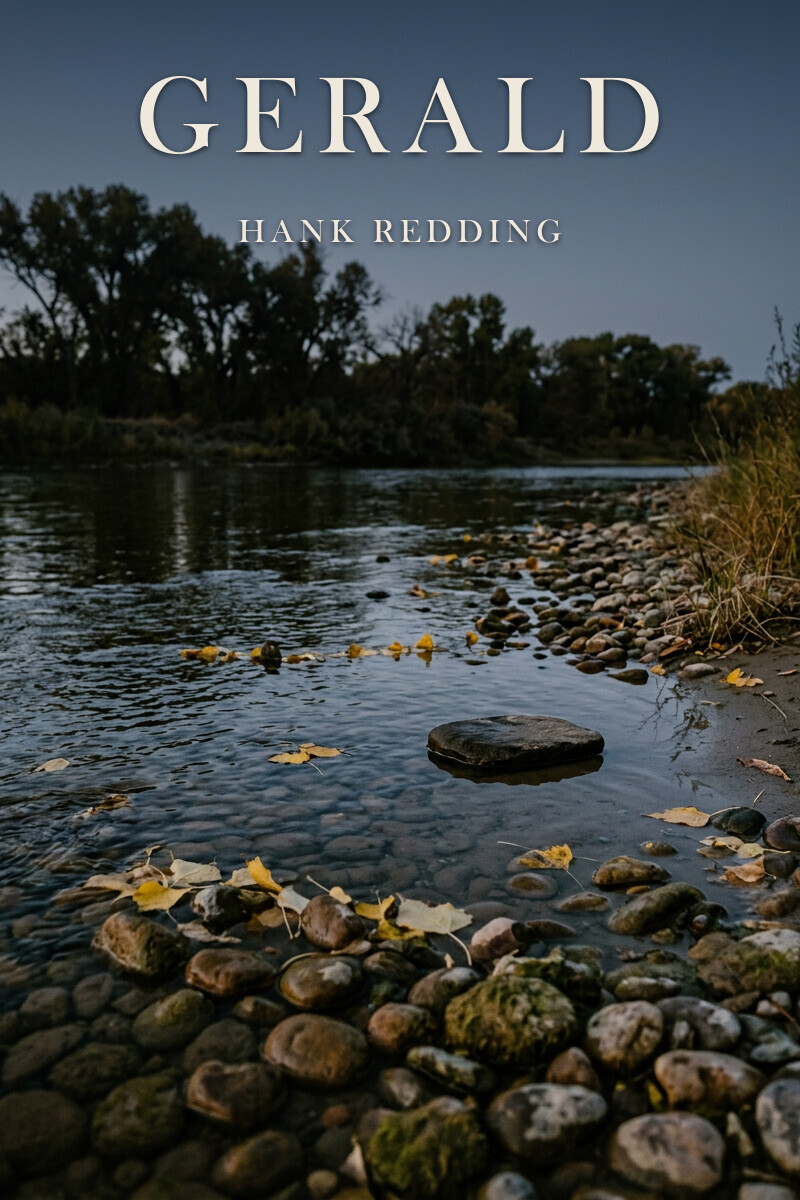
The water at the slow place was shallow enough to see the bottom, and the bottom was stones the size of a fist, brown and green and furred with moss that moved a little in the current, as if it were breathing.
They had come here for crawdads. That was the whole reason, the first summer. Sundays, mostly, with a coffee can for the catch and a bread bag of sandwiches, while Darlene had the house to herself for an afternoon, which he understood now she had needed more than she ever said. He would turn over a stone slowly, upstream side first so the mud washed away from it, and there one would be, backing up with its claws raised, outraged.
She had shrieked the first time. The second time she leaned in so close her hair went in the water.
He had shown her how to hold them. Behind the claws, thumb and finger, firm but not hard. She had held one up to her face and looked it in the eye and told it its name was Gerald. After that every crawdad was Gerald. She caught eleven Geralds that summer.
And she had put every one back where she found it. Not just in the water. Under the same stone. She would lift the stone and wait for him to lower the crawdad in, and then she would set the stone down over it as carefully as a lid.
He had asked her once why it mattered which stone.
She had looked at him like he was slow. “Because that’s where he lives,” she said. “If you put him somewhere else, he won’t know how to get home.”
He could see her as she was that day, plainer than he had been able to see her in years. The red sneakers she wore in the river because Darlene said the rocks would cut her feet, soaked dark and squelching. The sunburn across the back of her neck. Her hair, which was Darlene’s color, wet at the ends and drying stiff. The smell of her when he lifted her up the bank at the end of the day: river water and sunscreen and the peanut butter she had gotten on everything.
He laughed, sitting there on the dead cottonwood. It came out of him like something knocked loose. Then it stopped being a laugh, and he put his hand over his eyes and sat there with it.
There was a can in the cooler on those Sundays. There was always a can. He had not let himself put that in the picture for twenty-six years, and he put it there now, because it belonged there. He had watched her in the slow place with a beer in his hand and thought that was being a good father, and by the arithmetic of that house, it was.
A car crossed the bridge above him, ka-thunk, ka-thunk. He waited for it to be gone.
He had six summers of her. That was the whole of it. He had gone over them so many times, in so many bars, that they had worn smooth as the stones in the river, and he could no longer tell which parts were true and which were only the shape his hand had made of them. Gerald. The slow place. The cup. The hallway. The hands on the dash. Everything after six belonged to people who had stayed.
He did not know what her voice had sounded like grown. He did not know whether she kept her hair long, or what she did for work, or whether she was the kind of woman who laughed easily or the kind who had learned not to. He did not know if she had ever come back here. He did not know if she had brought the boy, and shown him how to hold one behind the claws, and if she had, who she had told him taught her.
He hoped she had said nobody. He made himself hope that. It was the least he could do, and he knew exactly how little that was.
But he could see the boy at the edge of the slow place with his face turned up, a crawdad backing away in his hand, waiting, and her deciding what to say. He could not make her say it. In every way he tried to see it, she took a moment first.
Chapter Seven — Chalk
He left on a Saturday in April.
He could say it now in one sentence. For years it had taken a whole bottle to say it, and then he could not remember saying it.
It was the first warm day of the year. The cottonwood out back had not leafed yet, but the buds had split, and the air smelled green and sticky from them, and somebody down the block was running a mower for the first time that spring, the sound coming and going.
She had drawn a hopscotch on the concrete slab under the carport. Blue chalk and yellow, numbers one to ten, the seven backwards. She had been at it all morning, and the knees of her jeans were blue and yellow from kneeling, and there was chalk on her cheek where she had pushed her hair back. When he came out with the duffel she was standing on one foot on the four.
“Watch me do it,” she said.
“After,” he said.
He put the duffel in the bed of the truck. He got in. She was still standing on one foot, waiting for after. He backed out across the slab, and he watched in the mirror as the tires took the chalk up in two long smears through the middle of the numbers.
He told himself he would be back before dark. He meant it while he said it. That was the trouble with most of what he had said in those years. He meant all of it, for exactly as long as it took to say.
He was not back before dark. He was not back that year. He went back to the circuit and picked up for any contractor who would have him, and when the circuit would not have him anymore he drove truck, cattle and hay and oilfield pipe, a different motel every month and the same bottle. Some years he sent money, and some years he did not, and the years he did not, he had it.
Once he mailed a birthday card with a twenty in it. It came back unopened, her mother’s handwriting across the front.
He heard about Darlene the way he heard about everything from back here, sideways and late, from a man at a sale barn who had known the county crew. She had finished the license. She had worked nights at the hospital in Lander for going on twenty years. She had married a man who taught shop at the high school, a quiet man, the sale-barn man said, who did not drink. He had felt something when he heard it that he did not want to look at, and when he finally looked at it, it was relief, and the relief was for himself. Somebody else had done it. He was off the hook. He had thought that, in those words, and gone and had a drink on it.
Once, she wrote to him herself.
She was nineteen. It was a short letter on lined paper, and it found him at a motel in Casper where he had been living for most of a year. She was getting married in June. She wrote that she was not asking him to come. She was only telling him, she wrote, so that he could never say nobody told him.
He had read it drunk, sitting on the edge of the bed with the television on. He had decided to answer it sober. He had meant that too.
The letter was in the glove box now, with the card. He had carried the letter for thirteen years and the card longer, from truck to truck. He had not answered either one. He had not read the letter again since Casper. He did not need to. It was eleven lines long and he could have said it for her, there on the bank, word for word. He did not. It was hers.
He had not been angry when he left. That was what he could not get past. If he had been angry there would be something to point to. He had only been tired, tired of a house where nobody was pretending anymore, and sure he was sparing them the worse version of himself that was coming. He had decided that leaving was the decent thing. He had made a whole religion of that one decision, and he had lived in it for twenty-six years.
He had used it again in March.
A boy, eight. He had thought about the boy for two hundred miles. He had thought about the boy carefully, the way a decent man would, and he had decided that the boy had been through enough this year without a stranger turning up who claimed to be something to him.
He was most of the way to Rawlins before he recognized the voice. It was the same voice. It had the same reasonable sound. He had pulled onto the shoulder and sat there with the engine running for a long time.
Then he had driven the rest of the way to Rawlins.
“You were on the four,” he said to the river. “I remember that. You were on the four.”
Chapter Eight — Her Name
The light went the way it does in October, all at once after taking its time. The far bank turned to one shape. The water held the last of the sky in long thin seams and then let go of that too. Somewhere up the road someone was burning leaves, and the smoke came down along the river, thin and sweet, and the cold came with it.
He stood at the edge of the slow place. The cold had come up through his boots.
“I’m not asking you for anything,” he said.
He meant it. He had decided on the drive that he would mean it.
“I’m going to come here,” he said. “Every October. I’ll stand right here and—”
He stopped.
He had heard it as he said it. The steadiness. The promise made out loud to someone who could not hold him to it. It was the voice from the carport. It was before dark.
He did not finish. He stood there with the rest of the sentence in his mouth and did not say it, and that was not a virtue either. It was only the first time he had ever caught himself in time, and it had come twenty-six years too late to be worth anything to anyone but him.
A heron he had not seen lifted off the gravel bar and went downstream low over the water, unhurried, and did not look at him, and was gone. It was a bird. A year ago he would have made something of it, and told it on the next stool by Friday, and had a drink on what it meant. He did not let it be anything else.
Then he said her name.
He said it once, out loud, at an ordinary volume, the way you would call someone in from the yard for supper. It was the first time he had said it in twenty-six years.
Darlene had wanted to name her for her own mother. He had wanted this one, for no reason but that he liked the sound of it, and he had argued until she let him have it. It was the one argument in that marriage he had ever bothered to win.
It was a child’s name. That was what he heard. He had chosen it for a baby and used it for six years, and it still belonged to a girl with wet hair and a crawdad held up to her face. He had no idea what anyone had called her since. Her husband would have had something of his own for her. The boy would have called her something he had no right to hear and never would.
He had wanted it to sound like her. It sounded like the last thing he had of her, which was not the same.
Before he went, he waded in to his ankles and bent and turned over a stone, upstream side first, the way he had shown her. Nothing under it. Too cold now; they would be down in the mud until spring.
He went to set it back where it had been, and could not. The current had already filled the hollow with silt, and he had not looked closely enough before he lifted it, and he could not tell now which way it had lain. He turned it in his hands. He set it down near the place. Close. It was not the place. He knew the difference. She had taught him the difference.
He climbed the bank and got in the truck and sat with the engine running until the heater caught. He did not open the glove box.
He did not know how long she had stood on the four that day, waiting for after. Nobody had ever told him. In twenty-six years it had not once occurred to him to ask.