PART I — Before the Noise (1871)
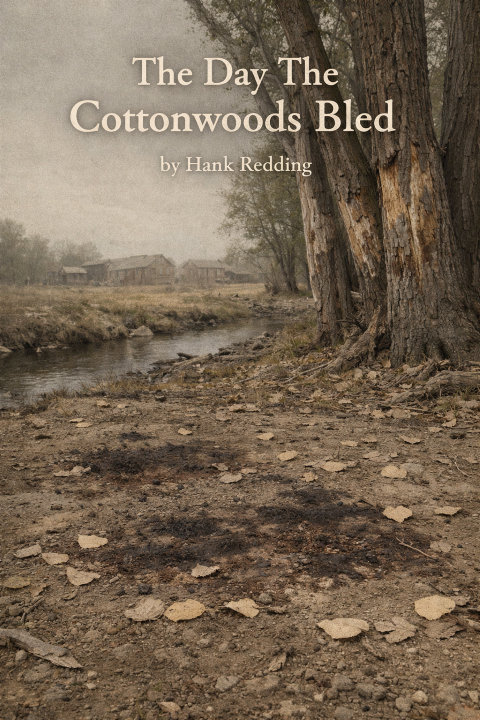
Amos Pike woke to the sound the creek made when it had nothing to prove. It ran behind town in a shallow cut lined with cottonwoods that leaned the way old men leaned—into whatever time was left, not away from it. In the spring the water came up high and tore at roots. In summer it dropped and showed stones like knuckles. This morning it was low and steady, the surface moving in a way that looked calm until you watched long enough to see how much it carried.
He lay in bed a moment with his eyes open, listening to it through the thin wall and the thin glass and the thin morning. The room smelled like dust and wool and cold iron. He was seventeen. He should have been thinking about leaving. He wasn’t.
He swung his feet to the floor and sat there with his hands on his knees like he was waiting for something to tell him what kind of day it would be. Nothing did. The world didn’t offer warnings. It just stayed the same until it didn’t.
Downstairs, the boardinghouse was already awake. The stove ticked as it heated. A kettle hissed. Someone moved a chair and the legs dragged harshly across the boards.
He pulled on his pants, buttoned his shirt, and shoved his feet into boots that still held last winter’s mud in the seams. When he stepped into the hall, the air was cooler, and he could smell bread.
Clara Quell was in the kitchen with her sleeves rolled to her elbows, flour on her forearms like chalk. She had her hair pinned up in a way that looked careless until you tried to do it yourself. She moved with the kind of economy Amos had seen in people who had raised children through sickness and weather and men who came and went. She didn’t waste motion.
Two small boys sat at the table. Their faces were smudged. They watched the loaf as if it might get up and walk away.
“Morning,” Amos said.
Clara didn’t look up. “You’re late.”
Amos looked at the light in the window. It was barely there, thin and gray. “I’m not.”
“You are if you want work.”
He started toward the coffee and stopped when he saw the boys’ hands. Both had red on their knuckles—raw skin from cold, or from scrubbing, or from being pulled where a hand shouldn’t be pulled. The younger one flinched when Amos came close.
Clara saw it too. She set the knife down. The blade made a soft sound against the wood, polite as a lie.
“They eat first,” she said, and slid the bread toward them. “Then you.”
The older boy tore into it like he was trying to erase hunger all at once. The younger took smaller bites and kept watching the doorway.
Amos poured coffee into a tin cup. It was too hot and too bitter and he drank it anyway. He liked how it burned. The burn gave shape to the morning.
Clara moved behind him to the stove, her shoulder brushing his back. Not a touch meant for comfort. Just a touch that happened because the kitchen was narrow and life was narrower.
“Your pa up?” she asked.
Amos nodded. “He’ll be at the livery.”
Clara made a sound that wasn’t approval or disapproval, just recognition. She had lived long enough to know that a man’s habits weren’t always a choice, but they were always paid for.
Amos ate his piece of bread standing at the counter. He watched Clara scrape flour from the board and wrap the loaf in cloth like it mattered. He watched the boys lick their fingers and keep looking at the door.
“Where they from?” he asked, keeping his voice low.
Clara didn’t answer right away. When she did, it was flat. “From the road.”
“That’s not a place.”
“It’s where most trouble comes from.”
Amos finished eating. He rinsed his cup without being told. Clara noticed, didn’t thank him. She didn’t thank people for doing what they should have done already.
When Amos stepped outside, the cold hit him clean. It wasn’t winter cold, not the kind that cracked wood and killed calves. It was early-season cold, the kind that made everything feel sharper than it had to.
The street was dirt packed hard by wagon wheels and time. The boardwalk ran along the front of the buildings, uneven boards cupped by weather. A dog lay under the saloon steps with its head on its paws like the whole town was a sound it had heard before.
Across the way, the schoolhouse stood square and plain. A single room. A bell in a small frame out front. The bell wasn’t ringing yet. It would. It always did. The day would be chopped into pieces by that bell and people would call it order.
Amos walked toward the livery.
The livery smelled like hay and piss and horses that had learned patience because they had no other option. His father, Howard Pike, was inside already, moving in the dim light as if he belonged to the building more than he belonged to himself.
Howard had once been broader. His shoulders had narrowed the way a river narrows when the banks rise. His hair was going gray at the temples. His hands were big and scarred and careful with tack, which meant he knew the difference between strength and damage.
“You’re up,” Howard said without looking.
“I’ve been up.”
Howard tightened a strap, checked the buckle, then finally turned. His eyes took Amos in with a quick assessment that felt like habit, not affection.
“Town’s quiet,” Howard said.
“It always is.”
Howard snorted, a small sound. “That’s what fools say right before they lose something.”
Amos didn’t answer. He went to the stalls and began the work he’d done since he could lift a bucket: water, hay, muck, brush. It was honest work in the way gravity was honest.
Outside, the town began to show signs of itself. A wagon rolled past with a slow creak. A man in a coat too thin for the season walked toward the mercantile with his head down. Somewhere a woman laughed once and then stopped as if she’d remembered something.
Howard went out front and leaned against the doorframe, chewing on nothing. Amos watched him through the stalls and knew his father was listening, the way old men listened—like sound could tell you what was coming if you had earned the right to hear it.
A rider passed at a jog, heading north. Not unusual. The road brought people in. The road took people out. The road kept its own counsel.
But the rider didn’t look toward the livery. He didn’t look toward anything. He just rode as if he was trying to outrun the idea of being seen.
Howard’s jaw moved.
“What?” Amos called.
Howard didn’t answer.
He pushed off the doorframe and walked back inside, going to the tack wall like he had a reason, like he was looking for something. Then he stopped and stood still.
Amos finished brushing a mare and stepped closer. “Pa.”
Howard’s eyes were fixed on nothing. “You hear that?”
Amos listened. The town held its ordinary sounds: a distant hammer, a door closing, a horse stamping. The creek behind everything, steady as a lie people believed because it was easier.
“I don’t hear anything,” Amos said.
“That’s what I mean,” Howard replied.
Amos felt something in his stomach shift, a small turn like a wheel catching on a stone.
Howard reached up and took down a shotgun from its hooks. He checked it the way men checked tools: not for comfort, but for function. He cracked it open, looked at the chambers, closed it again.
“What are you doing?” Amos asked, his voice low.
Howard glanced at him. “Being a man in a town that pretends it doesn’t need men.”
Amos didn’t like the way his father said it. It sounded like bitterness trying to pass as wisdom.
Howard set the shotgun behind the counter but not far. He leaned forward and rested his hands on the wood.
“You stay close today,” he said.
“I always do.”
Howard’s eyes hardened. “No. Close like you mean it.”
Before Amos could answer, the schoolhouse bell rang.
One clean pull. A pause. Another.
The sound traveled through town the way smoke traveled—finding every crack, settling in every place that couldn’t keep it out. The bell meant children would file in, girls with hair braided tight, boys with elbows sharp, slates tucked under their arms. It meant lessons. It meant the town pretending it was something permanent.
Amos watched the street.
A few children moved toward the schoolhouse in small groups, boots scuffing the dirt. A woman followed at a distance, calling after one of them to keep his coat buttoned. The dog under the saloon steps lifted its head, then put it back down.
Howard exhaled slowly.
Amos took a step toward the door. He didn’t know why. He just felt drawn to the street, as if the open air would make it make sense.
That’s when he saw Clara Quell in the doorway of the boardinghouse, wiping her hands on her apron, looking out toward the schoolhouse not like she was watching children, but like she was counting exits.
She caught Amos’s eye across the street. For a moment her face softened, not into kindness, but into something that might have been worry if she allowed herself to have it.
Then she looked away.
A breeze moved through the cottonwoods behind town. The leaves made a dry, whispering sound like paper being handled. The creek kept running, carrying nothing a person could name.
Amos stood with one hand on the livery doorframe and felt the day press against him like a hand at his back, not pushing, just present.
Howard spoke quietly behind him. “If it starts, you don’t go out there to be brave.”
Amos didn’t turn. “What starts?”
Howard didn’t answer.
The bell rang once more, a final call.
Then—so fast Amos thought for a heartbeat he had imagined it—sound tore through the air from the direction of the schoolhouse.
A crack. Sharp. Metallic. Too clean.
A gunshot.
The town seemed to inhale and forget how to exhale.
Amos felt his body move before his mind agreed. His hand tightened on the doorframe. His eyes locked toward the schoolhouse. Somewhere down the street, a horse screamed as if it recognized the sound the way animals recognized storms.
Howard’s boots hit the boards behind him. The shotgun came into view at Amos’s side like an answer no one wanted.
A second crack followed—closer, or maybe it only felt closer because now the first one had a shape.
Amos swallowed and tasted coffee and bread and something else beginning to rise, sour and metallic, like fear had its own iron.
He stepped forward.
Howard caught his shoulder—not hard, but firm enough to make the bones understand.
“No,” Howard said. “Not yet.”
Amos stared down the street at the schoolhouse door.
The bell frame stood still.
The cottonwoods whispered.
And then the morning split again—wider this time—by a third shot, and the day stopped being ordinary forever.
PART II — The Taking
The third shot broke glass.
Not cleanly. Not all at once. It spidered a schoolhouse window outward, the sound sharp and tearing, followed by a scream that cut off halfway through itself like a rope snapped under load.
Howard Pike moved.
The shotgun came up from behind the counter as if it had been waiting for permission. He stepped past Amos, his shoulder brushing him hard enough to knock sense loose.
“Stay,” Howard said.
Amos didn’t answer. His mouth wouldn’t work.
Howard stepped onto the boardwalk.
The street had gone still in the way prey goes still—not calm, not quiet, just emptied of choice. People stood frozen where they were, hands half-raised, bodies angled wrong. A woman dropped a basket of apples and didn’t bend to retrieve them. They rolled into the dirt and stopped.
From the south road came the sound of hooves.
Fast. Too fast for travelers. Tight together. Eight riders, riding hard, coats flapping open, dust boiling up around their legs. Their horses were lathered already, eyes white, mouths flecked with foam. These were men who hadn’t stopped when they should have.
The first rider raised his rifle and fired into the schoolhouse door.
Wood exploded outward.
A child fell into the street.
Amos saw the body hit and knew immediately it was wrong. Too light. Too loose. The legs folded under at an angle no leg should make. Blood followed a half second later, pouring out of the child’s chest in a way that didn’t look possible, like something inside had been opened all at once.
Someone screamed the child’s name.
The riders didn’t slow.
They hit the center of town firing.
Windows shattered. A bullet punched through the mercantile sign and took half the lettering with it. Another round blew through a man’s neck as he ran, the force snapping his head sideways and spraying blood across the boardwalk in a wide, wet fan. He dropped without a sound, hands still reaching for nothing.
Howard fired.
The shotgun roared and one of the riders jerked backward in the saddle, chest caving inward as buckshot tore through coat and bone. He stayed upright for three steps, then slid off his horse and hit the dirt with a sound like meat dropped on a table. He twitched. His boots kicked once. Then he was still.
The others shouted—not in fear, but in irritation.
One of them swung a rifle toward the livery.
Howard fired again.
The blast took the rider’s arm nearly off at the elbow. Bone shattered. Flesh ripped open. The man screamed as his horse bolted, dragging him for several yards while his ruined arm slapped against the dirt like it belonged to someone else.
A rider behind him shot him through the head without breaking stride.
Blood and fragments sprayed backward, dotting another rider’s face and coat. The man laughed and wiped his cheek with the back of his hand, smearing it red.
Amos was moving before he understood he was moving.
He ran to the edge of the boardwalk and ducked behind a post as a round tore through the space where his head had been. Wood exploded into splinters that buried themselves in his cheek and neck. He felt one stick, sharp and hot, and slapped it away without thinking.
The air filled with noise.
Gunfire. Screaming. Horses screaming louder. Wood breaking. Glass shattering. The wet sound of bullets entering bodies and the heavier sound of bodies hitting ground.
From the schoolhouse, a teacher staggered into the doorway, blood pouring from her shoulder. She raised her hands.
A rider shot her through the mouth.
Her head snapped back. Teeth and blood sprayed outward in a bright arc. She fell backward into the schoolhouse and disappeared from sight, the sound of her body hitting the floor drowned by another volley of shots.
Inside the boardinghouse, Clara Quell heard the first screams and moved without hesitation.
She grabbed the two boys by their collars and shoved them toward the back room. They stumbled, crying, slipping in spilled flour and dropped cups. She kicked the door open and pushed them under the bed, forcing them flat with a hand between their shoulders.
“Don’t move,” she said. “Don’t breathe loud.”
One of them tried to speak. She clamped a hand over his mouth.
Gunfire hammered outside.
A bullet punched through the wall above the bed, showering plaster and wood dust down onto Clara’s back. She flinched once, then climbed on top of the boys, her body pressed over theirs, her weight crushing, absolute.
Another round hit lower.
It tore into her side, ripping through muscle and bone. The force lifted her off them for a moment before gravity brought her back down hard.
She gasped—not a scream, just a sharp intake of air—and then went slack.
Blood poured out of her and down over the boys’ faces, warm and thick, soaking their hair and clothes. One of them bit down hard on his own hand to keep from making a sound. The other stared up into the darkness beneath the bed, eyes wide, watching blood drip from Clara’s chin onto the floorboards in slow, heavy drops.
Outside, the sheriff burst from his office with his pistol raised.
He got one shot off.
A rider hit him in the chest with a rifle round that knocked him backward into the doorframe. He slid down, leaving a dark smear behind him, and tried to stand.
They dragged him out by his boots.
His badge caught the sunlight, bright and wrong against the blood soaking his shirt. A rider stepped on his hand, grinding it into the dirt until bone cracked.
“Where’s it kept?” the rider asked.
The sheriff coughed. Blood bubbled at his lips. He tried to speak and couldn’t.
The rider smashed the butt of his rifle down onto the sheriff’s throat.
The sound was soft and wet, like stepping on something that shouldn’t be stepped on.
The sheriff’s eyes bulged. His body spasmed once, boots scraping shallow lines in the dirt, then went still.
They left him there, mouth open, tongue dark and swollen, badge smeared red.
The apothecary fired from his doorway with a double-barreled shotgun, both barrels at once.
The blast caught a rider square in the face.
His eye burst. His nose disappeared. Teeth flew outward in a spray of blood and bone. He dropped to his knees screaming, hands clawing at what was left of his face, blood pouring through his fingers in sheets.
Another rider rode past and shot him through the back of the head.
The apothecary didn’t have time to reload.
A rifle round tore through his chest, punching a hole so clean he stared down at it in confusion, his hands shaking as if trying to fix something small. He took three steps back, bumped into his counter, and sat down gently.
Blood filled his lungs. He drowned standing upright.
The riders spread through town.
They shot people hiding in cellars. They fired into houses without looking. They dragged a man out from under a wagon and shot him while he begged, the bullet blowing out the back of his skull and painting the wagon wheel red.
A woman ran with a baby in her arms.
A shot caught the baby first.
The force snapped the child’s head backward and ripped it from her grip. The woman screamed once—high and animal—before another round took her in the spine and folded her into the dirt.
Blood slicked the street.
It ran in shallow streams toward the creek, dark and thick, carrying bits of hair and cloth and things Amos didn’t want to recognize. Flies appeared almost immediately, drawn by the smell, landing on wounds that still twitched.
The cottonwoods along the creek shuddered as bullets tore through bark and sapwood. Sap ran down their trunks like pale blood. Leaves fell, spinning slowly through smoke and dust, landing on bodies that hadn’t finished dying yet.
Howard fired again and again until the shotgun was empty.
He reached for shells and a rider shot him through the shoulder.
The impact spun him around. The force ripped muscle and shattered bone. Howard slammed into the livery wall hard enough to knock the breath out of him. He slid down, leaving a smear of blood behind, his arm hanging wrong, useless.
Amos screamed his name.
Howard looked at him, eyes clear, teeth clenched. “Don’t,” he tried to say.
A rider swung his rifle toward Amos.
Howard shoved himself upright and took the shot meant for his son.
The bullet hit him high in the chest.
It punched through his ribs and out his back in a spray of blood and bone that splattered the stall behind him. Howard staggered forward, took one step, and fell face-first into the dirt.
Amos ran to him.
He dropped to his knees and rolled his father over. Howard’s eyes were open but unfocused. Blood bubbled at his lips with each shallow breath. Amos pressed his hands to the wound, felt the heat and wetness and the terrible softness beneath his fingers.
“Pa,” Amos said. “Pa.”
Howard tried to speak.
Blood filled his mouth. He choked. His body jerked once, hard, then went slack.
The riders finished their work.
They moved through town methodically now, shooting anyone still breathing, setting fire to two buildings for no reason anyone could ever name. Smoke rose into the sky, thick and black, carrying the smell of burning wood and burning flesh.
Then, as abruptly as they had come, they gathered.
One rider counted heads.
Another wiped blood from his knife onto the hem of his coat.
They rode out the way they had come, hooves pounding, dust rising to swallow them whole.
By the time the sound faded, the town was already dead.
The silence that followed wasn’t peace.
It was absence.
Amos knelt in the street with his hands in his father’s blood, shaking so hard his teeth clacked. Around him, bodies lay where they had fallen—twisted, broken, unfinished.
The schoolhouse stood open, its door hanging crooked, chalk still written on the board inside.
The bell frame stood untouched.
The cottonwoods whispered.
And the creek carried everything away.
PART III — What Survived
The first thing Amos noticed was the smell.
It wasn’t one smell. It was layers—powder sharp enough to sting the back of his throat, blood sweet and metallic, shit and piss released when bodies let go of whatever dignity they had left. Under it all was smoke, heavy and clinging, the kind that soaked into clothes and hair and stayed there.
Flies came before people did.
They appeared in black clusters, settling on wounds, crawling into mouths that hung open, landing on eyes that didn’t blink anymore. Amos waved them away with a shaking hand and they came back immediately, unafraid.
He was still kneeling when his legs gave out.
He didn’t fall forward or backward. He just folded sideways and sat in the dirt, his hands still red, still slick. His father lay in front of him exactly where he had fallen, face turned toward the ground as if he were embarrassed to be seen like this.
Amos reached out and touched his shoulder.
The body was already cooling.
He pulled his hand back fast, like the cold might bite him.
Around him, the town remained wrong.
People lay in positions that made no sense—half through doorways, twisted under wagons, collapsed on steps they had climbed a thousand times. Blood pooled and soaked and darkened. In places it had begun to dry, turning brown at the edges, cracking like mud.
Someone moaned.
The sound came from near the mercantile, thin and broken, like it was leaking out of a hole instead of a mouth. Amos turned his head slowly, his vision tunneling in and out.
A man lay against the wall, his leg gone below the knee, bone white and jagged where it had been ripped away. He clutched at the stump with both hands, eyes wild, lips moving soundlessly.
Amos stared at him and did nothing.
He couldn’t remember how to stand. He couldn’t remember what a person did when another person was dying in front of them.
The man made a choking sound and went still.
The silence pressed down hard after that, heavy as wet wool.
Hours passed.
Or minutes.
Time had lost its shape.
Eventually, someone else moved.
A woman crawled out from beneath a wagon, her dress torn, her face gray with dust and shock. She stood on shaking legs and looked around as if she expected the town to rearrange itself into something recognizable.
She saw a body she knew.
She dropped to her knees and screamed until her voice shredded into nothing.
That broke something open.
People emerged from cellars, from crawl spaces, from behind overturned furniture. Some stumbled into the street and fell. Others stood where they were and stared as if they’d stepped into a bad dream they couldn’t wake from.
A man walked past Amos carrying his wife in his arms. Her head lolled back, neck bent wrong, blood matted into her hair. The man kept walking, whispering to her like she might answer if he just said the right thing.
At the boardinghouse, the back room stayed closed.
No one went inside at first.
The doorframe was splintered. Blood seeped out from beneath the door and spread slowly across the floor, dark and steady. Flies gathered there too, thick enough to look like moving cloth.
When they finally opened it, the boys came out first.
They crawled.
They were slick with blood that wasn’t theirs. Their faces were blank, eyes too wide, mouths working without sound. One of them kept looking back under the bed as if something might follow.
Behind them lay Clara Quell.
She was still pressed forward, her body curved protectively, her arms bent like she might rise if asked. The bullet had torn through her side and out her back. Her apron was soaked through, heavy with blood. Her hair had come loose and lay across her face.
Someone reached for her shoulder.
Someone else stopped them.
They stood there, looking at her, not knowing how to touch what she had become.
Amos watched from across the street.
He didn’t remember walking there. He didn’t remember standing up. He just knew he was there now, his boots sticking slightly to the boards where blood had dried.
He recognized Clara’s hands first.
They were still dusted with flour.
The boys were taken away, wrapped in blankets that quickly turned red. They didn’t cry. They didn’t speak. One of them kept rubbing his forehead against the cloth like he was trying to erase something behind his eyes.
The sheriff lay where they had left him.
His badge had been pried from his chest, leaving a raw patch of torn skin behind. His mouth was still open. His tongue had swollen dark and thick. Someone gently closed his eyes, then immediately wished they hadn’t.
The sun moved.
It rose higher, then began to sink, casting long shadows that cut the street into pieces. Bodies that had looked pale in the morning light now looked gray, then blue.
Heat did its work.
The smell thickened.
Fires were lit by necessity, not ceremony. Not burning the dead—no one had the stomach for that—but burning debris, burning blood-soaked boards, burning anything that threatened to rot faster than they could deal with it.
Amos sat with his back against the livery wall and watched smoke rise.
His hands shook constantly. He pressed them between his knees to keep them still. It didn’t help.
Someone came and knelt beside him.
A woman. Older than him, younger than his mother would have been if she were alive. Her dress was torn at the hem. Her hands were raw, knuckles split and bleeding.
She didn’t say his name.
She didn’t say anything.
She just stayed.
They sat like that as the light faded, the town reduced to silhouettes and ash. Somewhere a horse screamed again, then fell silent. Somewhere else someone retched and kept retching until there was nothing left.
When the first stars appeared, Amos realized he was still breathing.
The thought made him angry.
They carried bodies then.
Two at a time when they could. One at a time when they couldn’t. Children first. Always children first.
The schoolhouse floor was slick with blood. Chalk still marked the board, half-finished words waiting for a lesson that would never come.
They moved the dead outside and laid them in rows.
Amos found his father again at dusk.
He knelt and cleaned Howard’s face with water from the creek. The water turned red immediately. He wiped anyway, again and again, until his father looked more like himself and less like what the day had done to him.
“I stayed close,” Amos whispered.
The words felt useless. He said them anyway.
They buried no one that night.
The ground was too hard. The people were too broken.
They covered the bodies with sheets, with coats, with whatever could be found. They built fires and sat around them, not for warmth but for proof that light still existed.
The cottonwoods stood dark against the sky.
Their trunks were scarred. Sap bled down them in pale streaks. Leaves continued to fall, drifting down silently, landing on covered forms and open ground alike.
The creek ran dark for a long time.
And when Amos finally lay down in the dirt beside the fire, the woman still near him, he did not sleep.
He stared up at the stars and learned something he would never forget:
Survival was not the same as being spared.
It was simply what happened when the body refused to stop.
And the day was not finished with them yet.
PART IV — The Weight of Staying
Morning came without apology.
It didn’t soften the town or offer distance. It just laid light across what was already there and made it visible again.
The fires had burned down to coals. Smoke hung low and sour, trapped in the shallow basin like it had nowhere better to go. Ash coated the street in a fine gray layer that stuck to boots and hems. The smell was worse in daylight—rot beginning its work, blood warmed again, the sweetness of death settling in.
Amos pushed himself upright and felt every muscle protest.
His clothes were stiff with dried blood. Some of it was his father’s. Some of it wasn’t. He couldn’t tell anymore and didn’t try.
The woman who had sat with him through the night rose at the same time. She moved slowly, favoring one leg, her face drawn tight with exhaustion. In the light, he could see a bruise blooming along her jaw, yellow already at the edges.
“Morning,” she said, like the word still meant something.
He nodded.
They stood together without touching, looking at the town as if it belonged to someone else now.
The first burial began before anyone spoke about it.
They started with the children because no one could bear the idea of leaving them exposed any longer. Shallow graves were dug at the edge of town, beneath the cottonwoods where the ground was softest. Shovels struck roots and stones. Hands blistered and bled. No one stopped.
The bodies were small and light and wrong in ways Amos didn’t want to catalog.
A man carried his daughter wrapped in a blanket that had once been blue. He laid her down gently, like she might wake if he was careful enough. When it came time to cover her, he hesitated, then scooped the first shovel of dirt himself, sobbing as it struck cloth.
Others followed.
There was no prayer. No words rose that didn’t feel like lies.
When they finished, someone placed stones at the heads of the graves. Names were spoken quietly, not to mark them but to prove they had existed at all.
They moved on to the others.
Howard Pike was buried in the afternoon.
Amos dug the grave himself. The shovel felt too heavy and too light at the same time. Each scoop of earth came up damp and dark, clinging to the blade like it didn’t want to be let go.
The woman stood nearby, handing him water when his hands shook too badly to hold the canteen. She still hadn’t given her name. He hadn’t asked.
When the hole was deep enough, they lowered Howard in.
Amos stood at the edge and looked down at his father’s face, clean now, almost peaceful if you didn’t know what peace actually cost. He wanted to say something—something that sounded like forgiveness or thanks or goodbye—but nothing came.
He shoveled dirt until the grave was filled.
The mound stood higher than the others, raw and uneven. Amos pressed it down with his boots, tamping it firm, as if making it solid would make it final.
By late afternoon, the question surfaced.
It didn’t come all at once. It arrived in fragments, in glances, in half-spoken thoughts that hovered and retreated.
People began to pack.
A wagon was loaded with bedding and pots. A man led his remaining horse south without looking back. A woman folded her life into a single trunk and closed the lid like she was sealing a wound.
“The road’s safer than staying,” someone said.
Another answered, “Nothing’s safe.”
Arguments didn’t rise. No one had the energy for that. Decisions were made quietly, alone or in pairs, without ceremony.
Amos sat on the steps of the livery and watched them go.
The woman came and sat beside him, close enough that their shoulders touched this time. The contact startled him more than the gunfire had.
“You leaving?” she asked.
He shook his head without thinking.
She nodded, like she had expected it. “Me neither.”
He looked at her then, really looked.
Her eyes were gray, rimmed red with exhaustion. A cut split her lower lip. Her hands were scarred and capable. She looked like someone who knew how to stay upright even when the ground moved.
“My name’s Lydia,” she said, after a moment.
“Amos.”
She waited. He added, “Pike.”
“I know,” she said.
The cottonwoods rustled overhead, leaves brushing together in that dry, whispering way. The sound was almost gentle, and that made it worse.
“They’ll come back,” Amos said.
Lydia didn’t argue. “Maybe.”
“I can’t stop them.”
“No,” she agreed.
He swallowed. “Then what’s the point of staying?”
Lydia looked at the town—the broken windows, the dark stains, the graves already settling. She looked at the creek, running clearer now, carrying what it always carried without comment.
“Because leaving doesn’t undo it,” she said. “And staying doesn’t either. But staying means the ground doesn’t forget us.”
Amos didn’t know if he believed her.
But the idea lodged in him anyway.
That night, fewer fires burned.
People gathered what they needed and lay down where they could. The town was smaller now. Thinner. Like something had been stripped away and what remained had to decide if it was enough.
Amos lay on his back and stared up at the branches overhead. The cottonwoods were riddled with scars—chunks torn from their trunks, bark shredded, sap dried pale against dark wood. Still standing. Still rooted.
Lydia lay nearby, wrapped in a blanket, her breathing slow and even. Not asleep, he realized. Just resting.
The moon rose, white and indifferent.
Amos thought of the riders. Thought of the sound of hooves. Thought of his father’s hand on his shoulder, firm, final.
He understood then that staying was not bravery.
It was weight.
It was choosing to carry what the day had placed on them and see if the ground beneath their feet could hold it.
The cottonwoods whispered overhead.
And in the quiet, Amos made no vows.
He simply remained.
PART V — What the Day Became
The town learned new shapes.
Windows stayed boarded longer than they needed to. Footpaths shifted where people walked around places they no longer wanted to cross. Doors were left open at night—not from trust, but from the knowledge that a closed door had not saved anyone.
Weeks passed.
The creek cleared first. It always did. Water remembered how to move on long before people remembered how.
Bloodstains faded from the dirt, worn down by sun and wind and the steady passage of boots. What remained were darker patches, places where the ground held a little more weight than it used to. The cottonwoods kept their scars. Sap hardened. Bark split and curled. Leaves came and went as if nothing had happened beneath them.
Some people left.
They didn’t announce it. They packed at dawn or after dark, hitched wagons without conversation, and went south or east or anywhere that wasn’t here. Their houses stood empty, doors banging in the wind until someone tied them shut.
Others stayed.
They repaired what could be repaired. They nailed boards. They mended fences. They planted because the season demanded it, not because they believed in reward. Seed went into the ground without ceremony, pressed down by hands that shook less each day.
Amos worked.
He repaired the livery alone at first, then with help. He hauled boards, reset hinges, scrubbed blood from wood until his arms burned. Some stains never came out. He stopped trying to erase them.
At night, he dreamed of sound.
Hooves. Gunshots. The bell ringing too late.
He woke soaked in sweat, heart racing, hands clenched as if still holding something warm and gone. Lydia was there most nights, sitting nearby, sometimes touching his shoulder, sometimes not. They did not speak about the dreams. They did not need to.
Names began to surface.
Not all at once. One here, another there. Spoken quietly while passing a grave. Written on scraps of paper and nailed to posts. Carved into wood with knives not meant for carving.
No list was complete.
That felt right.
The schoolhouse reopened in late summer.
Only a few children came. They sat far apart. They flinched at sharp sounds. The bell was rung by hand, gently, as if it might shatter if treated like it used to be.
Amos stood outside the first morning it opened and listened.
The sound carried the same distance it always had.
It did not mean the same thing.
On an afternoon thick with heat, Amos and Lydia walked to the edge of town where the cottonwoods stood closest together. The graves there had settled. The earth had sunk in places, revealing where the ground still remembered.
They stood side by side, not holding hands.
“I think about them coming back,” Amos said.
Lydia nodded. “I think about them not.”
“That scares me more,” he admitted.
She looked at him then, really looked. “They don’t get to decide what this place is,” she said. “Not anymore.”
Amos watched the leaves move overhead. Sunlight filtered through them in broken pieces, landing on the ground in shifting patterns.
“I don’t know what I’m supposed to become,” he said.
Lydia didn’t answer right away.
“You don’t have to become anything,” she said finally. “You just have to not disappear.”
That night, Amos went down to the creek alone.
The water ran clear now, stones visible beneath the surface. He knelt and washed his hands. The water stayed clear. That surprised him more than anything else.
He sat there until the stars came out.
He said his father’s name out loud. He said Clara Quell’s name. He said the names he remembered and left space for the ones he didn’t.
The words fell into the water and were carried away, not erased—just moved.
Behind him, the town stood quiet.
Not healed. Not redeemed. Still breathing.
The cottonwoods whispered in the dark, leaves brushing together like pages being turned by someone in no hurry.
Amos stayed until the night grew cold.
Then he stood and walked back toward the lights that remained, toward the place that had taken everything and still demanded something in return.
The day the cottonwoods bled did not end the world.
It marked it.
And those who stayed learned to live inside the mark—
not because it made sense,
but because leaving would have meant letting the ground forget their names.
The creek kept running.
The trees kept standing.
And the town, altered and scarred, continued—not forward, not back—
just on.