A short history
Immigrant Cars
How settlers rode the rails west, and what they carried.
In the last decades of the 1800s, the way onto the northern plains ran on rails.
The railroads had land to sell and freight to haul, and they needed people on the land to do both. For the families who came, the trip often began in one of two kinds of railroad car, and both went by the same name: the immigrant car.
Two kinds of car
The first was a passenger car, the cheapest way to ride west. The second was a boxcar, rented by a family to carry everything they owned: furniture, tools, seed, livestock, sometimes the lumber for the house they meant to build. Often one of them rode along inside it.
Railroad men and settlers used “immigrant car” and “emigrant car” for both. The Great Northern also called its plain passenger cars “colonist” cars. And on some lines the boxcars had a nickname of their own: “Zulu cars.” A Kansas man who rode one west as a boy in 1898 remembered it as the railroaders’ name for an emigrant car. He and his father slept on hay between the doors, with the cow and calf, the pigs and the chickens, while the rest of the family followed by passenger train.
The cheapest seat west
First-class travelers of the same years rode in Pullman cars, with upholstered seats, carpeted floors, gaslight chandeliers and separate sleeping quarters. Coach passengers slept in seats that reclined. Below both was the immigrant car: plain benches, a stove and a toilet at one end, and little else. Passengers could rent a mattress for the night.
Some of these cars were not built for people at all. Freight cars were fitted with wooden benches for the run west, then emptied and loaded with grain for the trip back east.
Robert Louis Stevenson rode an emigrant train across the plains in 1879, and he left one of the clearest pictures of the car: a long, narrow wooden box, “like a flat-roofed Noah’s ark,” with a stove at one end, a toilet at the other, and benches set crosswise on either side of a center aisle. The benches were too short to lie on. So passengers paired off, turned the reversible backs until two benches faced each other, and laid a board between them with three straw cushions on top, a bed for two. A railroad man sold the boards and cushions as the train was made up. His price started at two and a half dollars; by the time Stevenson bought his, it had fallen to one and a half.
A whole life in a boxcar
For a family moving a farm, the passenger car was the smaller problem. The larger one was the household. The railroads hauled settlers’ goods and stock in boxcars, and a family packed theirs with everything from the dishes to the barn cat. Usually one person could ride in the rented car free, to tend the animals on the way.
One such car, bound for a claim near Rhame, in what is now southwestern North Dakota, held lumber and nails for a tar-paper shack, china dishes, tools, a wagon, a walking plow, two horses, a flock of ducks, seven cows, about twenty-five chickens and two cats. The family’s fifteen-year-old son rode with it for ten days. He remembered the car as “crowded and stuffy.”
Not everything fit. Families chose what to bring, what to sell, and what to buy again once they arrived.
Why the railroads wanted them
The Northern Pacific crossed the Red River into Dakota in 1872, and settlers followed the track. Under the Homestead Act, a settler could claim 160 acres by building a house, living on the land for five years and farming it. The railroads had land of their own to sell, the Northern Pacific most of all, and every family that settled along a line would keep shipping and traveling by that line for years to come.
The result was the Great Dakota Boom. From about 1878 to 1886, more than 100,000 people came into northern Dakota, and the eastern two-thirds of what became North Dakota was settled. A second boom followed, from 1889 to 1915.
At the yards
St. Paul, Minnesota, was a gathering point for the northern lines. In the boom years, hundreds of immigrant cars stood in its railway yards, waiting to go west, and the passenger cars filled so quickly that many people had to stand.
Many of the travelers spoke little English. German-speaking families from Russia, whose dialect had drifted over generations away from Germany, sometimes handed the conductor a slip of paper with the name of the place they were going. One such family reached southern Dakota Territory around 1886. The men slept on the floor of the aisle so the women and children could have the seats, and the conductors stepped over them on their rounds.
The cars kept coming after the first boom ended. In 1895 an agent for the Great Northern gathered about 425 settlers at St. Paul, among them Dunkard and Amish families, and sent them north “packed in emigrant cars” with their household goods, livestock and farm implements. Most already had land picked out near Mayville, Devils Lake and the Turtle Mountains.
When the snow closed the line
A railroad that could carry a family onto the prairie could also leave them there.
In the winter of 1880–81, blizzards drove snow into the cuts of the Chicago & North Western between Tracy, Minnesota, and Huron, Dakota Territory, and packed it as deep as forty feet. By mid-January the cuts were impassable. Trains carrying food and fuel could not reach the new towns along the line until the beginning of May 1881. The towns had been built because of the railroad, and for most of that winter the railroad could not reach them.
The history behind Car No. 47
Immigrant cars are somewhere in Hank Redding’s own family history, though little of it was handed down beyond the fact that some of his relatives came west this way.
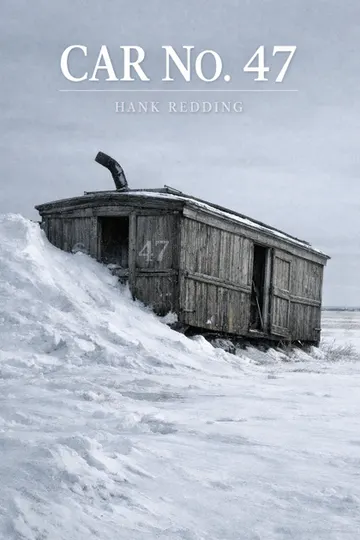
His novella Car No. 47 is fiction set inside that history: one immigrant car, cut loose in a Dakota winter, and the passengers who wait in it, measuring coal and food and wood until spring. The full novella is on Kindle.
Read the opening
Free, no sign-up
-
Car No. 47
The first pages of the novella: an immigrant car, a storm, and the gap that closes behind it.
Sources
- South Dakota State Historical Society, South Dakota Transportation, education kit, p. 4.
- South Dakota State Historical Society, “Loading an Immigrant Car,” South Dakota Transportation education kit.
- Linda Hall Library, The Transcontinental Railroad, digital exhibition, “Rail Cars.”
- Robert Louis Stevenson, “The Emigrant Train,” in Across the Plains (1892). The journey was in 1879.
- Merry Helm, “Immigrant Cars,” Dakota Datebook, Prairie Public.
- Jim Davis, “Emigrant Trains,” Dakota Datebook, Prairie Public, citing the Bismarck Daily Tribune, April 5, 1895, and W. B. Hennessy, History of North Dakota (1910).
- “The Great Dakota Boom,” North Dakota Studies, State Historical Society of North Dakota.
- Nancy Tystad Koupal, “Rose Wilder Lane on Railroads and the Winter of 1880–1881,” South Dakota History 51, no. 3 (2021).
- Aaron Hanson, “Great Northern Railway,” MNopedia, Minnesota Historical Society.
- Harvey County Historical Society, “‘Be Quiet! Don’t Even Sneeze!’ Zulu Cars” (2015), citing an 1874 Atchison, Topeka & Santa Fe letter on emigrant freight cars.
- Fred Wishart, “The Zulu,” Kansas Collection (an account of his family’s move to Smith County, Kansas, in 1898).
Read further
More like this
When a new story goes up
Leave an email and I’ll write when there’s a new story. Nothing else, and you can leave any time.
Or follow by RSS.