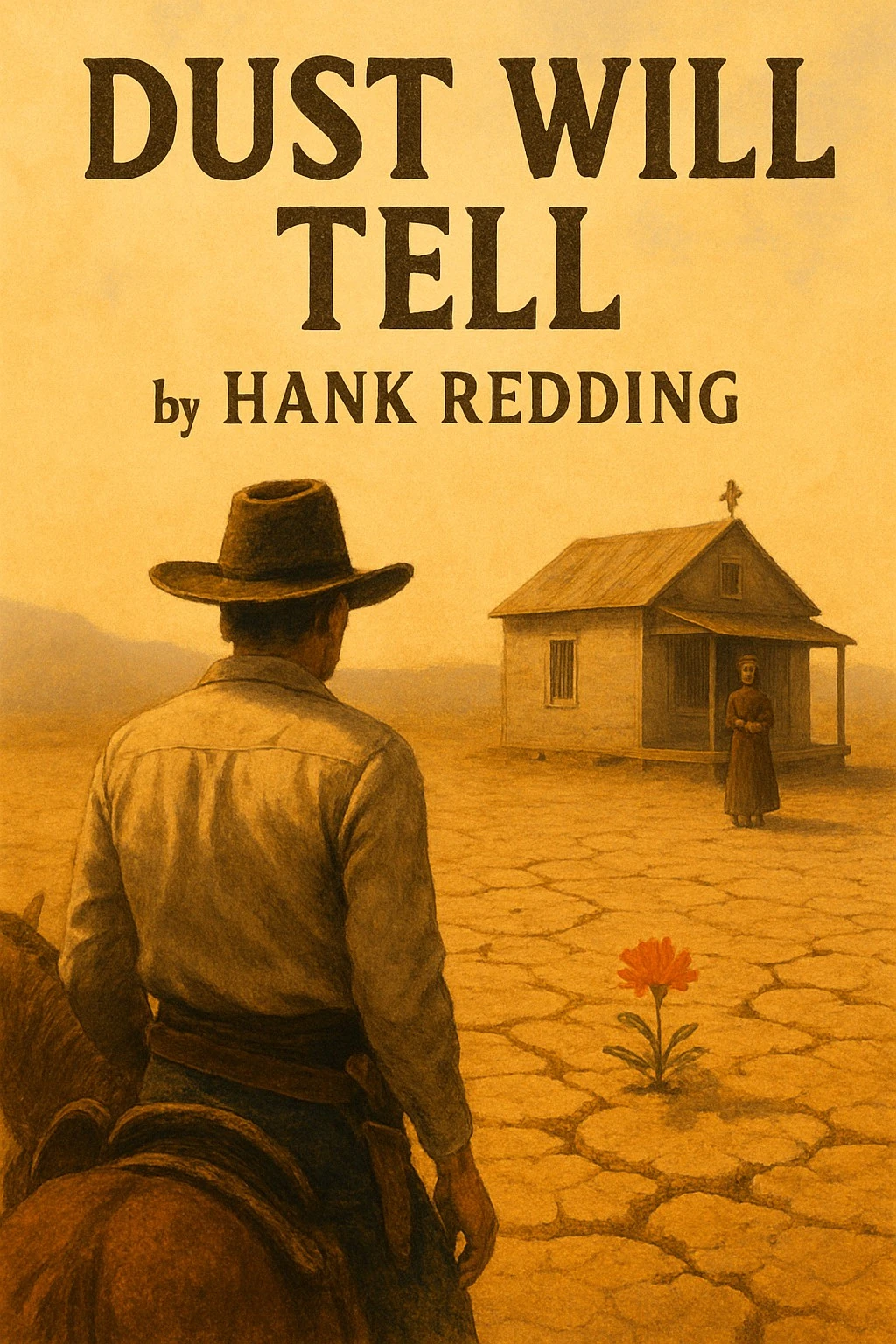
Dust Will Tell
A town where the sun never moves, the date never changes, and every stranger already knows his name.
Free with Kindle Unlimited • Kindle edition $2.99
A quiet Western about consequences, memory, and the truths that surface long after the dust settles.
Read the opening
The sun had already climbed too high by the time Ellis Marr crested the last ridge. From the saddle, the basin spread out beneath him like a hammered sheet of brass—flat, hot, and unforgiving. No breeze. No trees. Just dust in every direction, breathing heat up from below like the earth itself was exhaling.
He pulled the brim of his hat lower and checked his compass again. The needle ticked.
Wobbled. Then spun once before settling south-southwest. He tapped it. No change. He’d stopped trusting it two days back but kept checking anyway—habit more than hope.
Ellis squinted. There were no markers out here. No wagon ruts. No fence lines. Even the hills behind him had vanished into shimmer. All he had was a pencil-drawn map and the words his father left behind—words scratched into a final letter, delivered years too late.
“There’s a place they won’t mark on any map. Not because they forgot it. Because they meant to.”
He nudged the horse forward, the hoofbeats muffled in the dust. His shirt stuck to his back. The canteen on his hip was half empty, and the water inside had gone warm as bathwater. Still, he didn’t stop.
The first strange thing—though he didn’t notice it right away—was that he cast no shadow.
It wasn’t sudden. At first it seemed like the sun was wrong. High noon had come early, maybe. He chalked it up to heat shimmer, bad angles. But as the horse moved forward, there was still no shade under its legs. No silhouette trailing behind. Only light, and the pale distortion of the air around him.
He slowed the horse and dismounted. Looked around. Even the cactus—short, mean clusters of green spears—stood alone in the glare, surrounded by nothing but the same pale dust. He crouched, hand over his eyes, and checked again.
Still no shadow.
He reached into his satchel and drew out the journal. A plain book with frayed leather corners. Inside: three entries, a crude topographic sketch, and the name Vireo written twice, once with a question mark, once without.
He turned to a fresh page.
June 3rd. Noonlight. No landmarks. Compass unreliable. Terrain dry, flat, crusted with mineral haze. Windless. Silence feels... heavy.
He paused. Then added:
Possible optical illusion—no shadows observed. Check again tomorrow.
He capped the pen and looked out across the basin again. The heat warped the horizon like oil in a pan. Somewhere out there—if his father’s map held any truth—was what was left of a forgotten settlement. A town removed from history by something more than time. Something deliberate.
Ellis closed the journal. Tied it shut.
The horse shifted, uneasy. Its ears twitched back, then forward. There was nothing to hear, but it felt like something should be making a sound. A hawk. A fly. His own breath.
Instead, there was only sun. No wind. No shadow.
More from Hank Redding
-
 The Last Good Rope
Kindle Unlimited
-
 Car No. 47
Kindle Unlimited
-
 The Mercy Contract
Kindle Unlimited
-
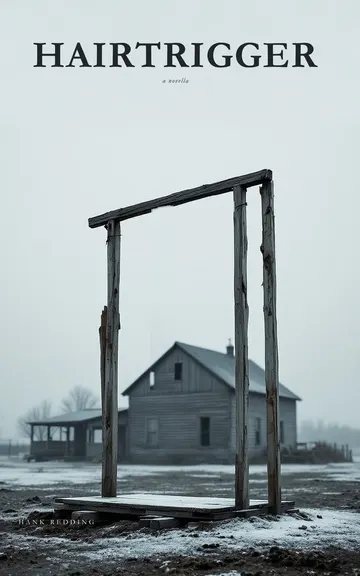 Hairtrigger
Kindle Unlimited
Or start free with Just Onward, a short story. All the books · All the open stories
When a new story goes up
Leave an email and I’ll write when there’s a new story. Nothing else, and you can leave any time.
Or follow by RSS.