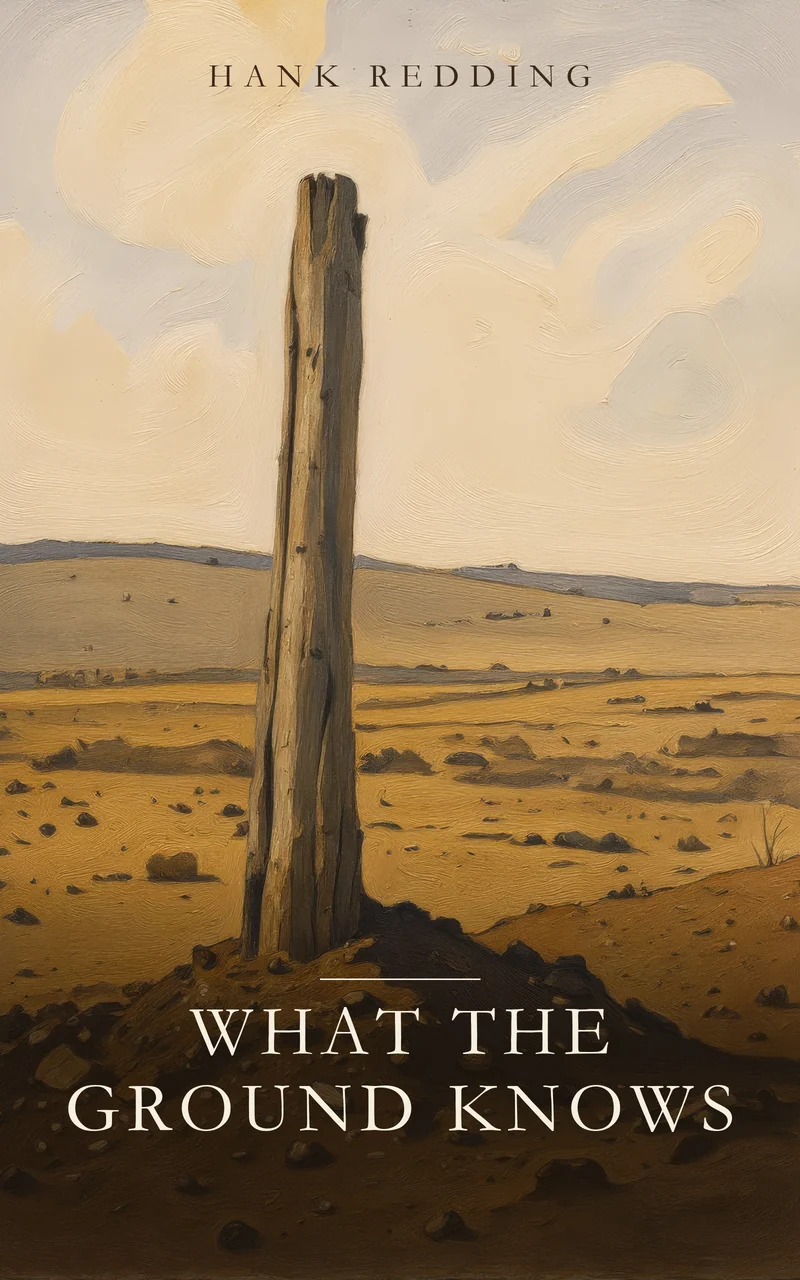
What the Ground Knows
A Novel
A woman hangs for a murder with no body. A stranger with no gun starts counting.
Coming to Kindle. This edition is being prepared for Amazon.
They hang Abigail Moore on a cold Friday morning for the murder of a man whose body was never found. The whole town comes to watch. Nobody has to be told where to stand.
Read more
Out past the edge of the crowd, a stranger watches with his horse behind him. Calder Finch carries no gun. He carries ten letters in his boot, written by a surveyor named Thomas Calder, who came to this orderly stockade town a year ago, began counting the men who had "left" without their tools or their boots, and was never heard from again.
Finch has one rule, and it was Thomas's: count what's there, then count what ought to be. In a town where a gambler is shot for wondering out loud at cards, a hired man dies of "fever" in the jail's back room, and a midwife has kept every death for twenty-two years without once counting the missing, the difference starts to show. In a register page inked black. In a children's skipping rhyme made of names. In the low rise past the graveyard where the water stands after rain.
Quiet, unsettling, and exacting, What the Ground Knows is a literary Western about a town that keeps the peace by deciding guilt before anything happens, and about what the ground gives back when someone finally counts.
Read the opening
The gallows had been built to last longer than the men it served.
It stood at the head of the square, where the street ran out and the ground went hard and pale, wagon ruts cut deep and never quite filled again. Two upright posts. A crossbeam darkened by weather and hand oil. A platform worn smooth by boots that climbed it with the same slow resignation every time. The rope hung coiled and ready, protected from the wind beneath a scrap of canvas, like a tool a man did not leave out in the rain.
Morning made no judgment.
Morning simply arrived.
A thin light lay over the stockade and the clustered buildings inside it—low roofs, smoke lines, doors half-open to cold air. The fort sat beyond, squat and practical, watching everything without moving. The flags on its poles barely stirred.
People came out in layers.
Men in stiff coats with their collars turned up. Women with shawls pulled tight around their shoulders. Boys who should have been carrying water or splitting kindling but were here instead, faces too awake. Children stood in pockets near their mothers' skirts, quieted by a look before they could speak.
No one had to be told where to stand.
They already knew.
The platform faced back into the square so the act could be witnessed properly. That was the point. This was not a private correction. This was instruction.
Gideon Holt had propped the saloon doors open and stood in them with a rag over one shoulder, the way he stood on any morning, as though the hanging were weather he meant to keep an eye on. Thatcher Walton had not unbarred his store. He stood in front of it anyway. Near the well, Ione Atchison waited with a canvas bag at her feet and her sleeves already turned back, because she knew how mornings like this one ended and who would be sent for.
Sheriff Eamon Shelton arrived without ceremony, as if stepping into a church service he had attended too many times to feel anything about. He wore a dark coat that did not flap in the wind. His hat sat level, brim shadowing his eyes. He carried no rifle. His pistol remained holstered. The authority was not in the metal. It was in the town's willingness to watch.
Behind him walked Deputy Roscoe Preston—younger, broader in the shoulders, with the kind of alertness that looked like readiness but was mostly fear disguised. His hand hovered near his belt as though he expected the crowd to turn into a threat.
It wouldn't.
Not today.
Harlan Hayden was already there, standing beside the gallows steps with his hands clasped in front of him. He did not wear a badge. He did not need one. Lean and clean-shaven, sleeves rolled back from his wrists, his fingers bore faint stains from rope and tar. He looked like a man who repaired fences for a living, except the thing he maintained was final.
The rope lay over his forearm.
He watched it the way a carpenter watched a blade—checking for fray, remembering what it could do.
A boy stood at the very front of the crowd, closer than the mothers allowed their own children to stand. Ten, perhaps. Thin wrists, a cowlick, a coat cut down from a man's. No one moved him back. He was Harlan Hayden's boy, Eli, and the town had long since decided that the hangman's son stood where he liked.
Harlan glanced at him once. Then he looked at the rope again.
A murmur moved through the crowd when they brought her out.
Abigail Moore walked between two soldiers from the fort. A lieutenant came a step behind them, gloved, his collar buttoned to the throat, eyes fixed on a point above the gallows as if he had been ordered to deliver a parcel and meant to see it signed for. The soldiers held her elbows lightly. There was nothing left in her to hold against.
Her hands were bound, but not high—no spectacle of struggle. She wore a plain gray shift, the kind given to someone who would not need pockets. Her hair had been pulled back and tied low. The morning air bit her cheeks until they flushed, as if her body still believed it was going to live.
She did not fight them.
Fighting would have changed nothing.
She walked with a hitch she tried to hide, favoring her right side, and once, at the foot of the steps, her breath caught in a way that had nothing to do with the steps. Ione Atchison saw it from beside the well. So did Harlan. Neither of them moved.
Her eyes moved across the people as they guided her forward. Past the saloon doors. Past the store. Past the faces she had sewn for and sold to and nodded at in the street for years, faces that did not look back. Then out beyond the crowd, to the open ground where the wind ran free, and there they rested a moment before they came back to the rope.
She looked for someone and did not find them. Or found them and chose not to react. Either way, her face remained almost still. The only betraying thing was her throat—swallowing too often, as if she could push down what was coming.
More from Hank Redding
-
 What Was Carried West
Kindle Unlimited
-
 Dust Will Tell
Kindle Unlimited
-
 The Last Good Rope
Kindle Unlimited
-
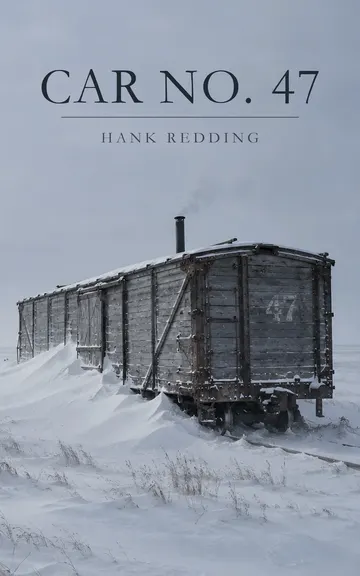 Car No. 47
Kindle Unlimited
Or start free with Just Onward, a short story. All the books · All the open stories
When a new story goes up
Leave an email and I’ll write when there’s a new story. Nothing else, and you can leave any time.
Or follow by RSS.